Ok, Ok, the following has absolutely nothing to do with honey, bees or beekeeping. Web sites are expensive so I’m just piggy-backing.
Talbot County Decoys
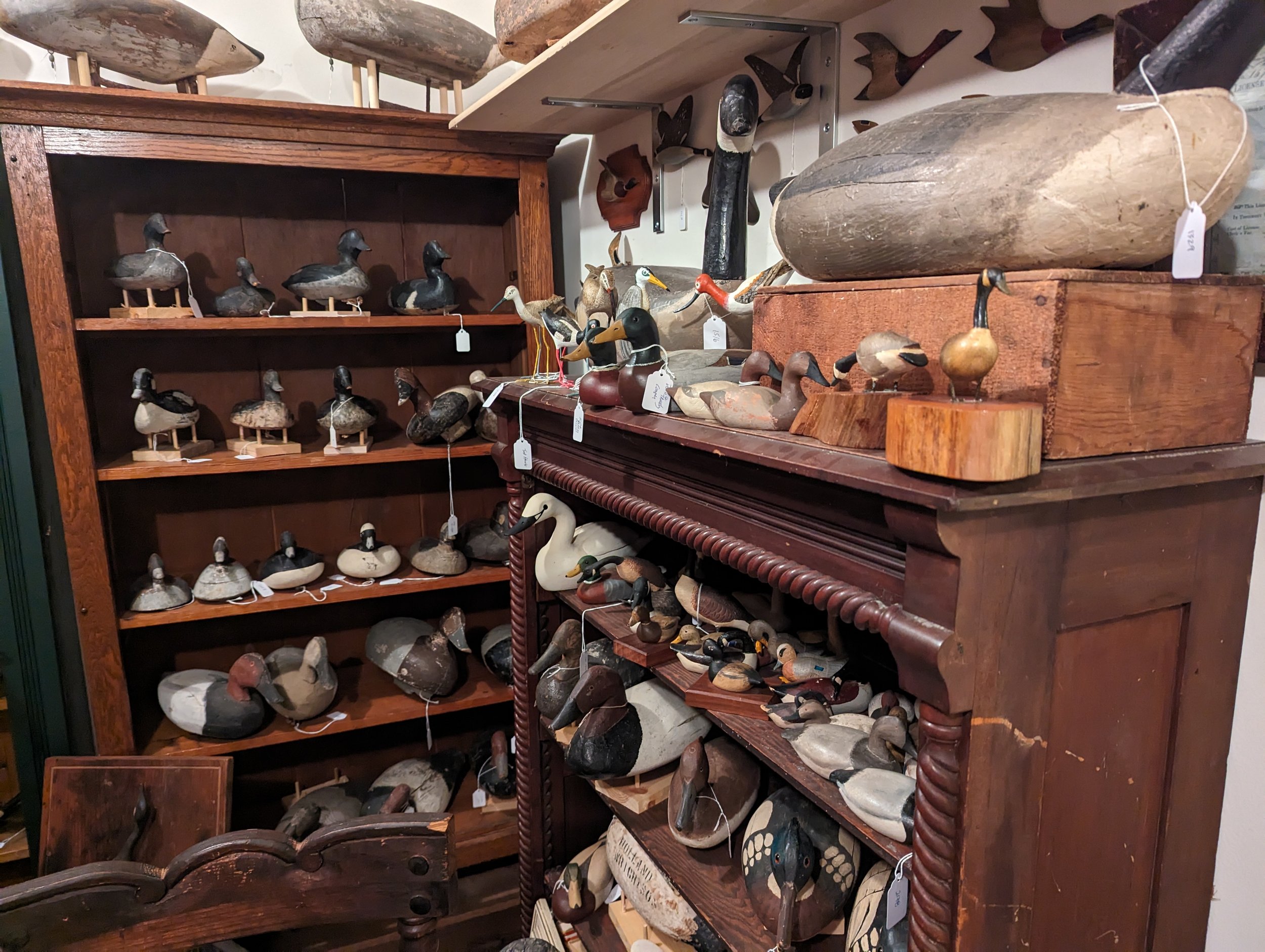
Decoy decoys ed parson decoys Chank Bill Elliot Brothers decoys ted hanks decoys AC A.C.Newnam decoys ACN newman valiant valliant decoys Richard tilghman decoys Pete Richardson decoys David dave stavely decoys Nelson irwin irvin Ball decoys Victor Horne Horn decoys Edmund Hardcastle decoys robert lambdin decoys evans foundary harry megargee decoys HPM Charles Howard Daffin decoys CFM Charles Forman Mielke Gaylord Ivens decoys Delmas Haddaway decoys John Panch Harrison decoys JP PT Hambleton decoys Henry Stevenson decoys Brook Steilkie decoys BS Harry Walsh decoys Clarence Clinton Quacky McQuay decoys Oz Owings decoys OS Otis Bridges decoys Gil Gilbert Lowe decoys Mock decoys JN Denny decoys Roger Keller decoys Joseph Liener decoys Slater Robinson decoys JRR decoys Woodie Woodrow Baynard decoys Elim Parkerson decoys Charles Hutson decoys CEH Harold Hall decoys Ed Edward James Phillips decoys Brandon Murphy decoys Joe Joseph Liebner decoys Long Point Gun Club, JMD decoys ELW Doris Thursby JW J.W. Cooper decoys Vernon Brosius decoys Dan Vaughan decoys Ed Ester Ernie Burns decoys The Duck Nest Robert Biggy Cole decoys Lee Walker decoys Clinton Warwick Blair decoys ELW Ebon L Waterfield Bill Sonny Legates decoys Junior Marshall decoys Jack Stovall decoys John Tolston decoys Leonard Dick Higgins decoys George Combs decoys John Blades decoys Rod Schwarm decoys Eddie Gay decoys Avalon Maryland md decoys Bellevue Maryland md decoys bozman Maryland md decoys Claiborne Maryland md decoys easton Maryland md decoys cordova Maryland md decoys Fairbanks Maryland md decoys mcdaniel Maryland md decoys st. saint st michaels Maryland md decoys neavitt Maryland md decoys newcomb Maryland md decoys oxford Maryland md decoys queen anne Maryland md decoys royal oak Maryland md decoys skipton Maryland md decoys trappe Maryland md decoys tilghman Maryland md decoys talbot Maryland md decoys tunis mills Maryland decoys md Sherwood Maryland md decoys wittman Maryland md decoys windy hill Maryland md decoys wye mills Maryland md decoys Cambridge Maryland md decoys Hillsboro Maryland md decoys secretary Maryland md decoys Dorchester Maryland md decoys Eastern Shore Maryland decoys md mid-shore decoys choptank decoysI buy antique (from the good old days) wooden decoys (duck, goose, and related) from Talbot County Maryland. Please contact me if you have any for sale.
There are only two makers who produced commercially, the Elliott Brothers of Easton and Ed Parsons of Oxford. Ok, fine, Robert Lambdin also sold decoys commercially but little is know about his output so we will ignore that. I avidly purchase decoys from these makers.
Ed and Esther Burns carved some wonderful miniature decoys and other natural scenes. Most are signed with “the Duck Nest”. They had a bunch of students, some of who lived locally.
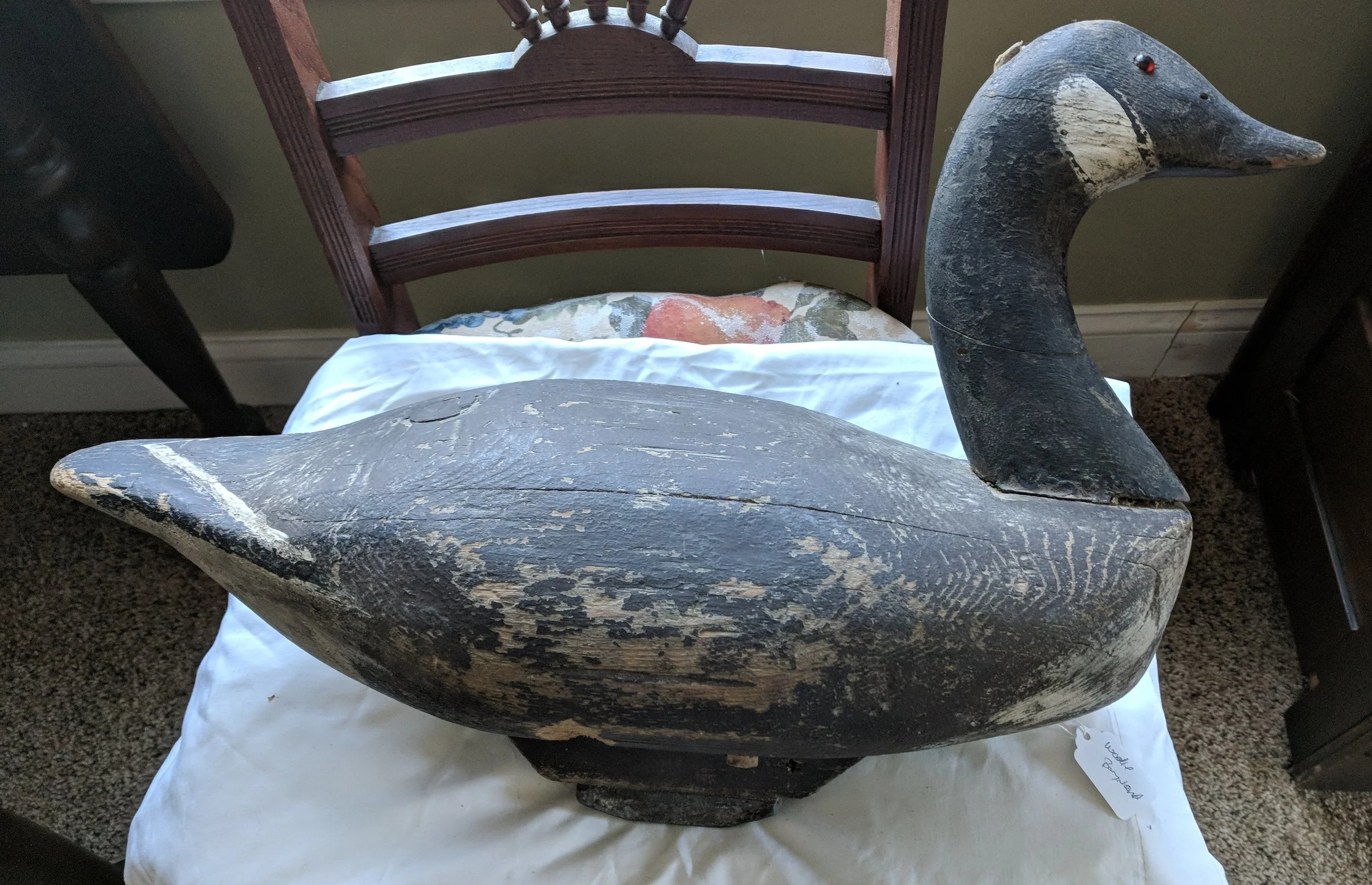
There are a multitude of carvers who only produced decoys for themselves. Some of the known artists, who I love their birds, are Richard Tilghman, AC Newman, Pete Richardson, Nelson and Irvin Ball, Ted Hanks, Frank Newman, Robert Lambdin, Edmund Hardcastle, Charles Howard Daffin, Clinton "Quacky" McQuay, Otis Bridges, and Woody Baynard. A bunch of the others too, lots of names really. I'm interested in the unknown carvers of Talbot County Maryland too. Please contact me if you have some for sale or just want to share this passion with another collector. Thanks
Woody Baynard
Nelson Ball
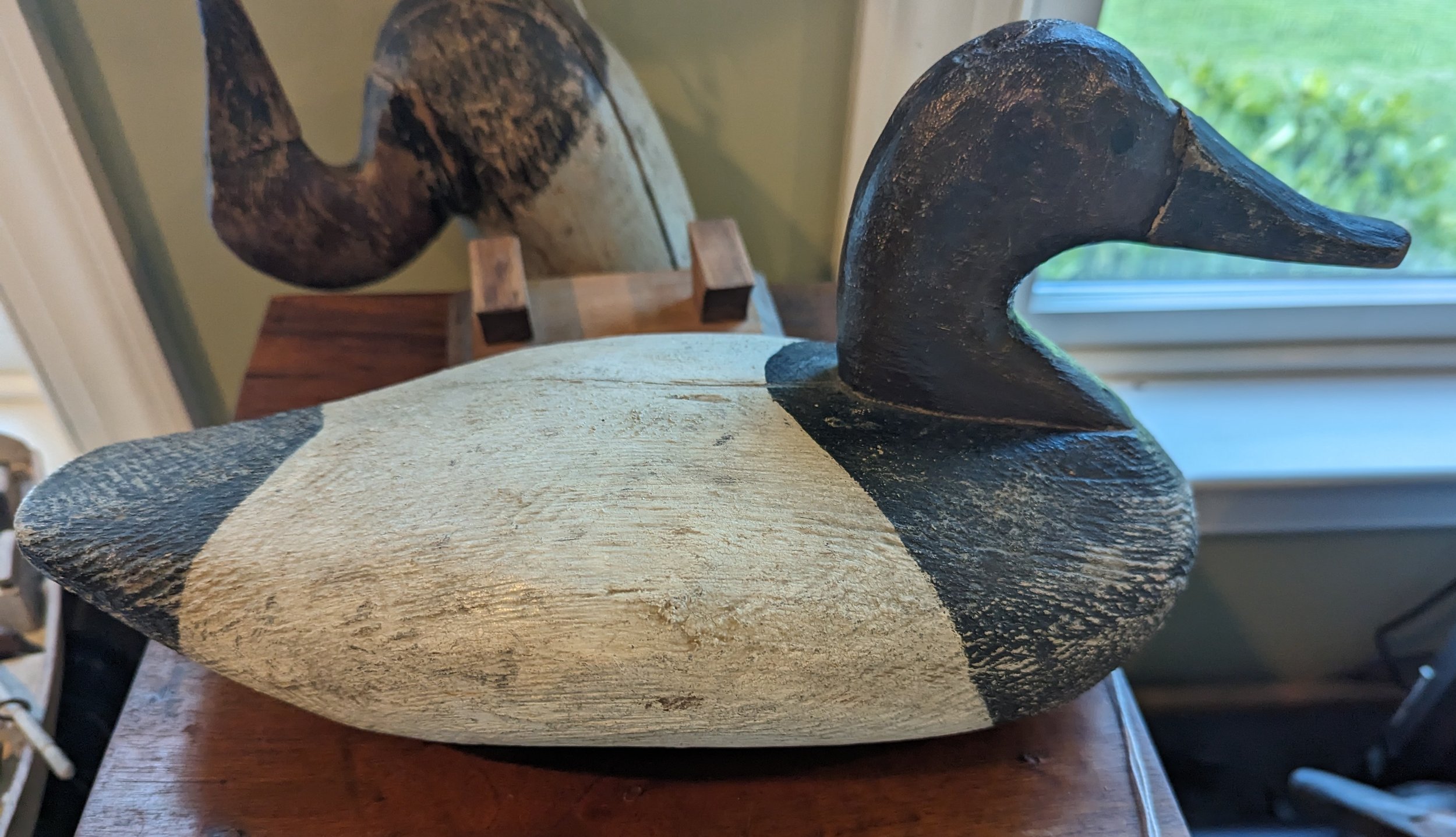
Each species that Nelson carved has a very different look.
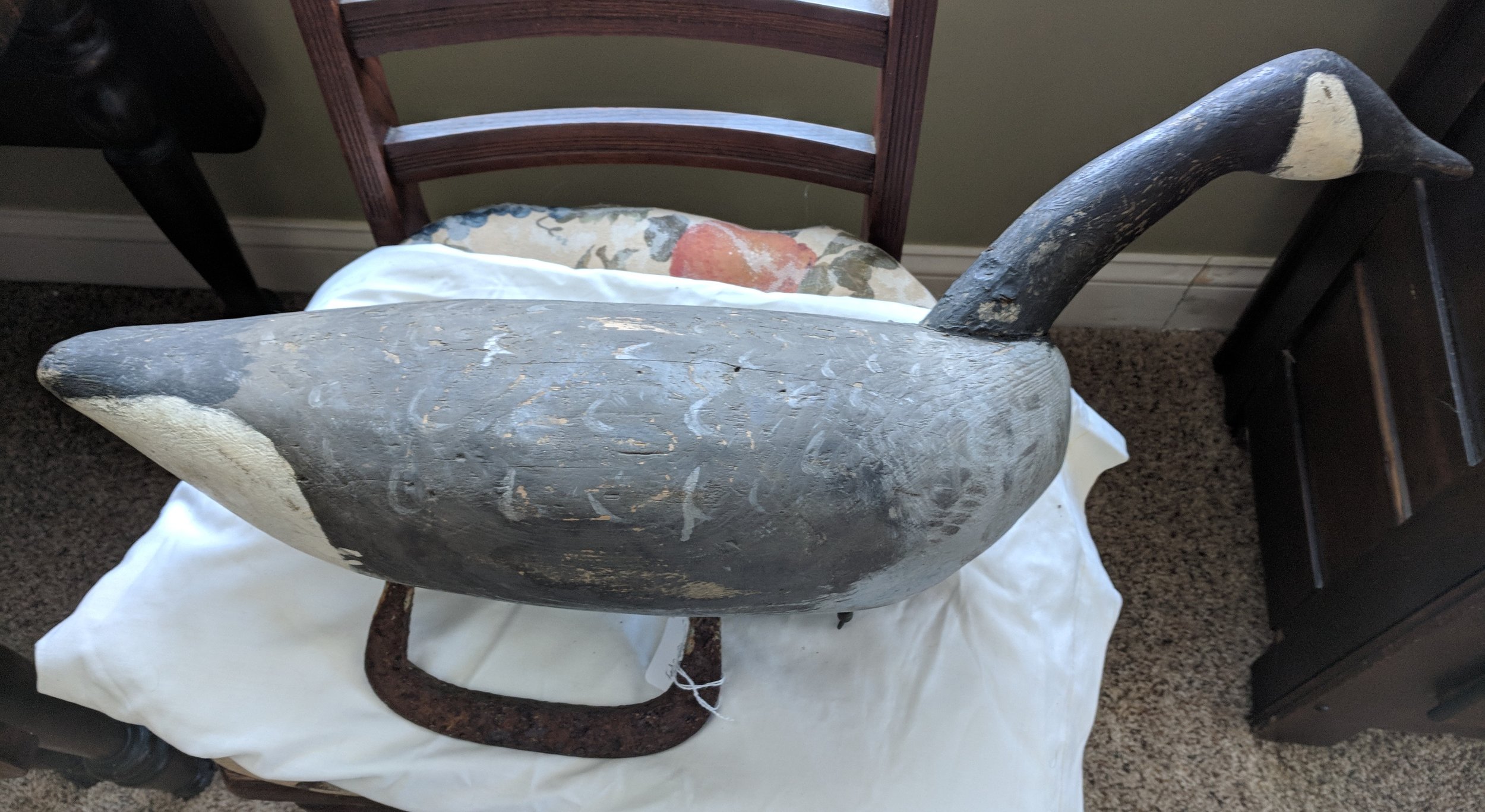
Otis Bridges
Ed and Esther Burns
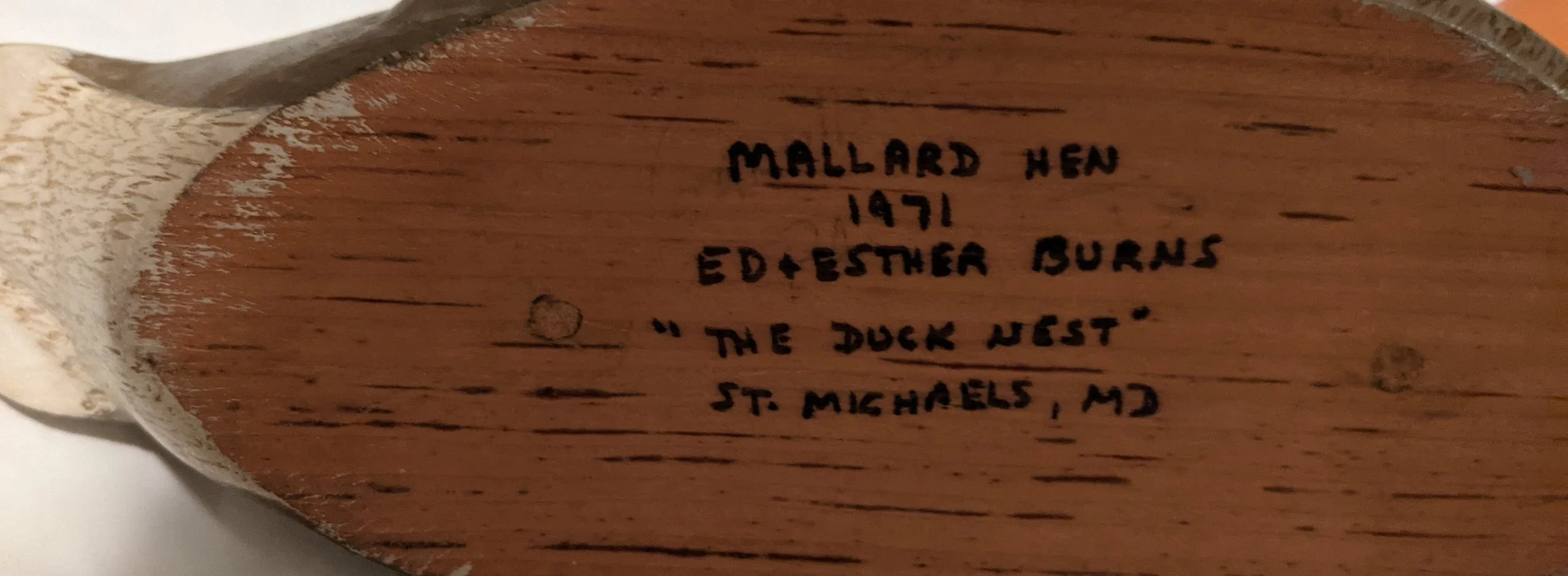
I’ve never seen a working decoy by the Burns. Their decorative carvings are wonderful.
Biggy Cole and Eddie Gay
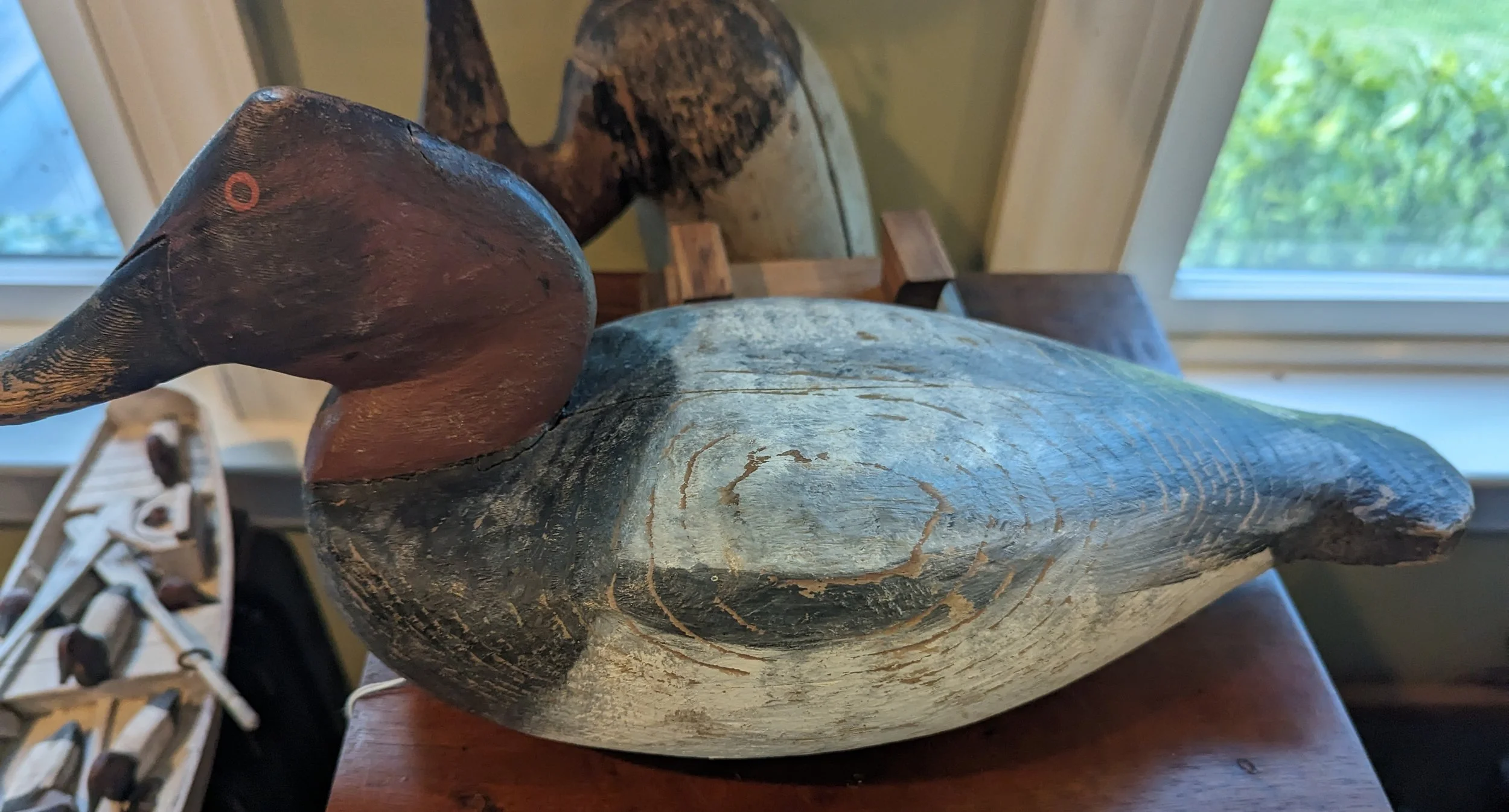
Charles Daffin
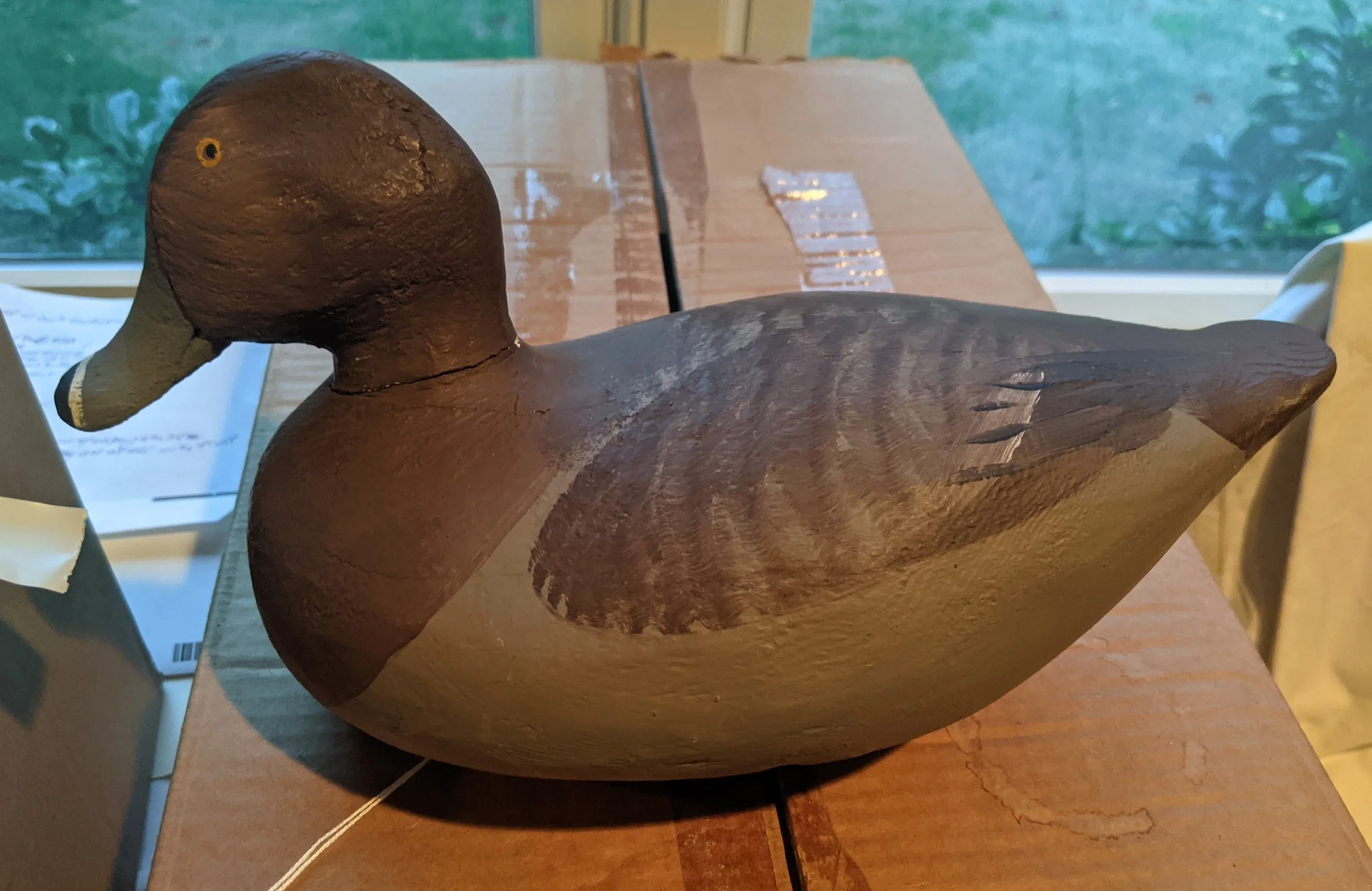
This rig has recently been identified and was carved / painted by both best friends.
Elliott Brothers
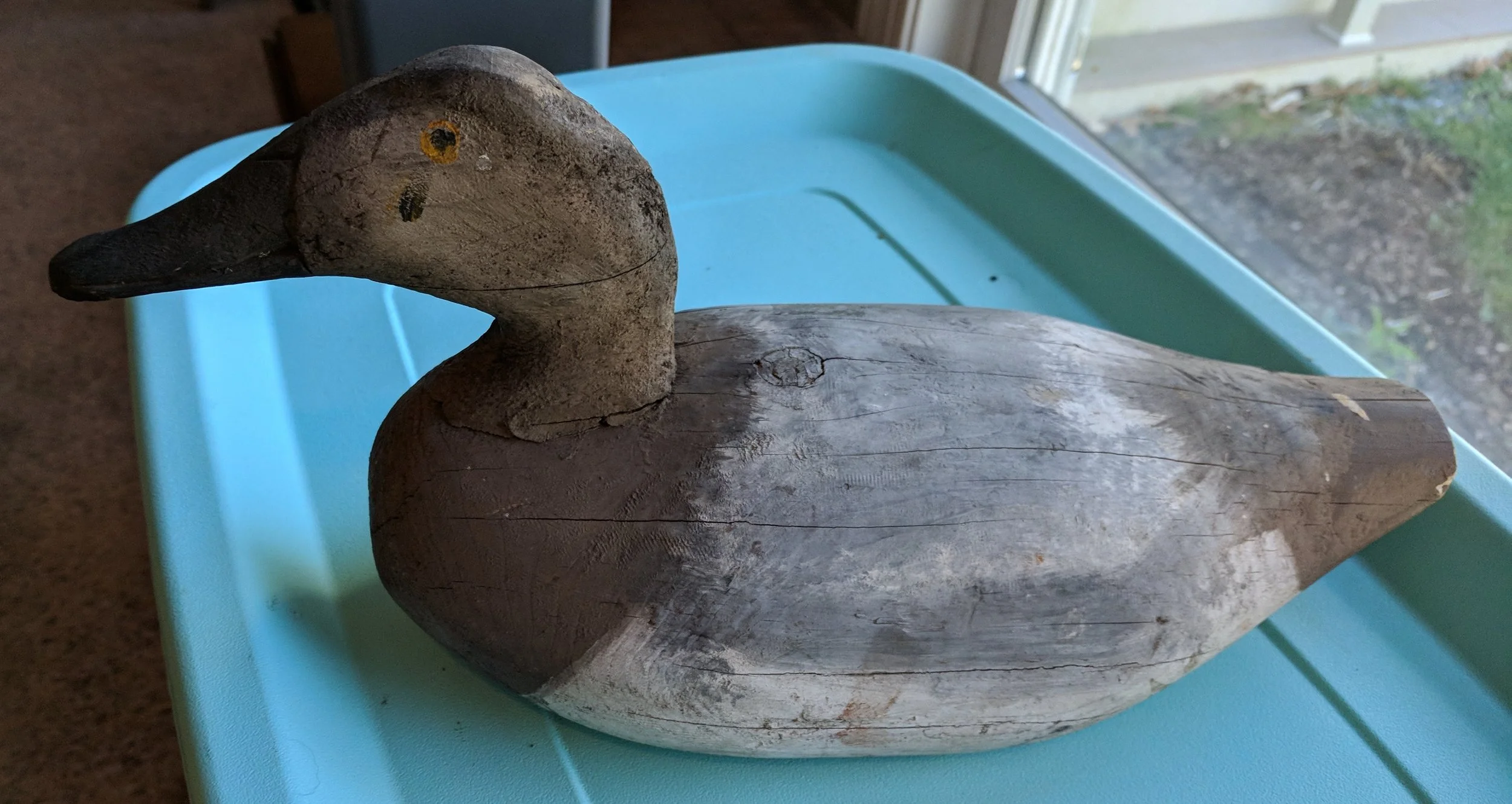
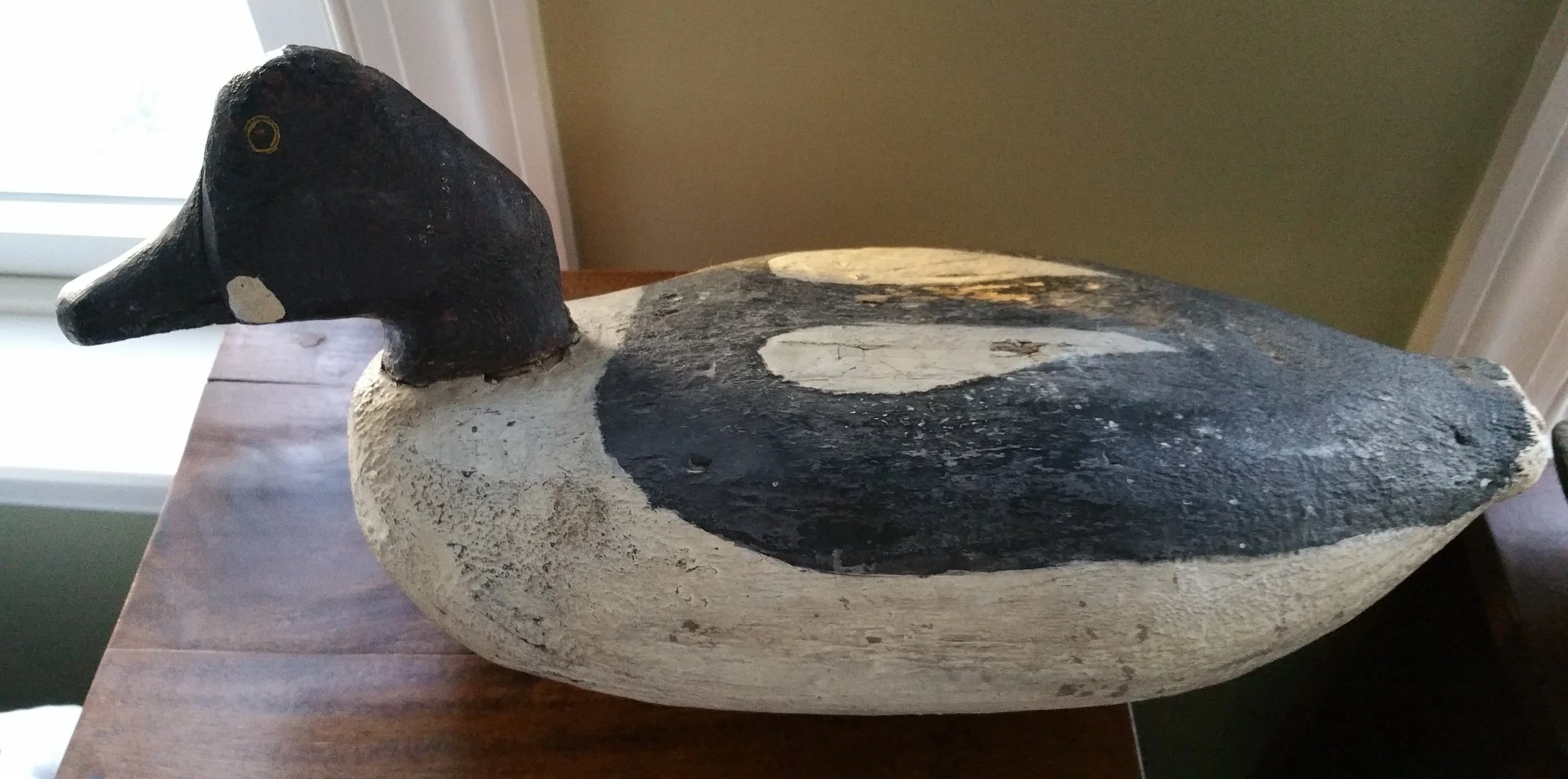
There is a huge variation in their work in terms of style and quality.
Ted Hanks
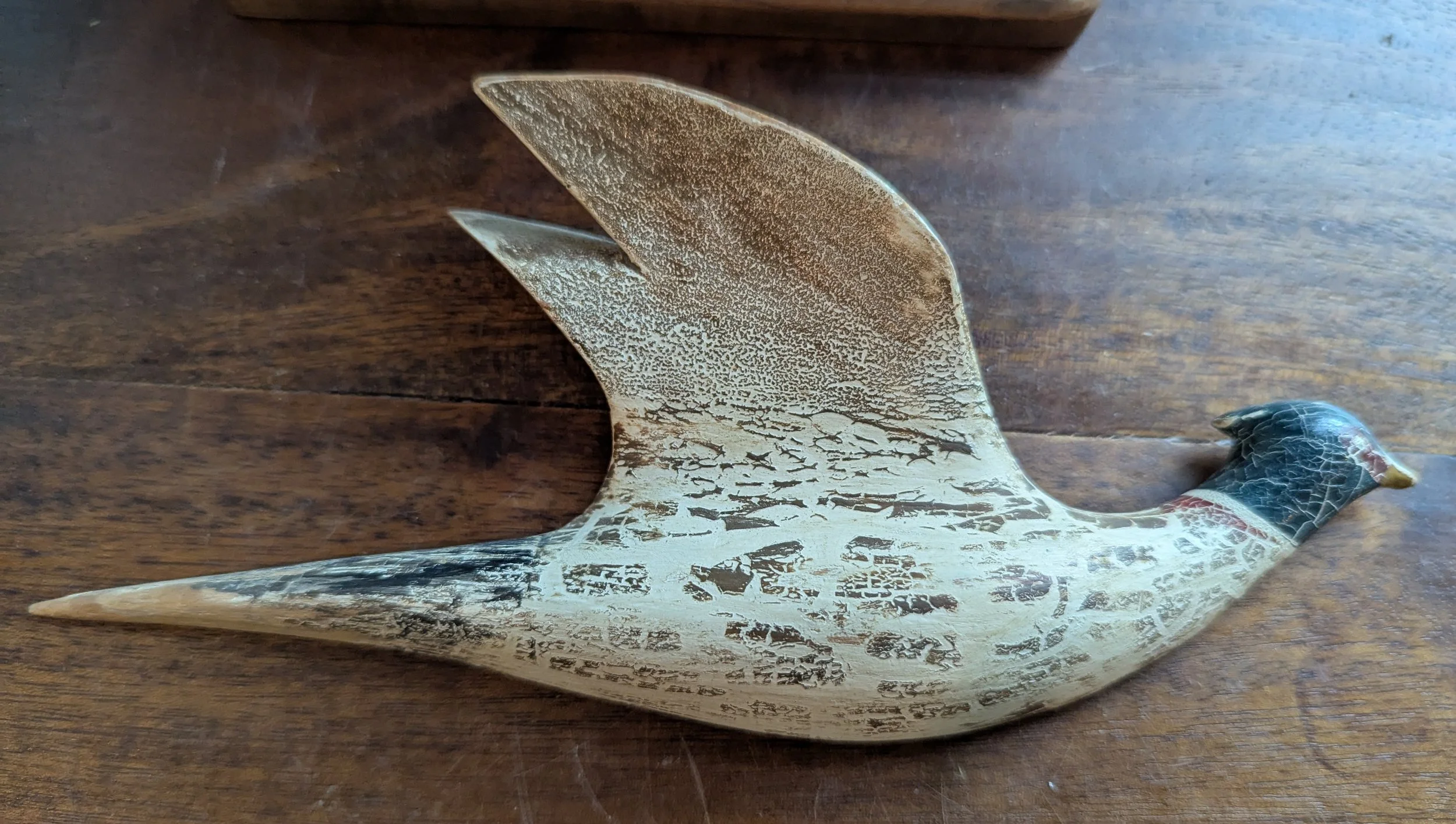
Edmund Hardcastle
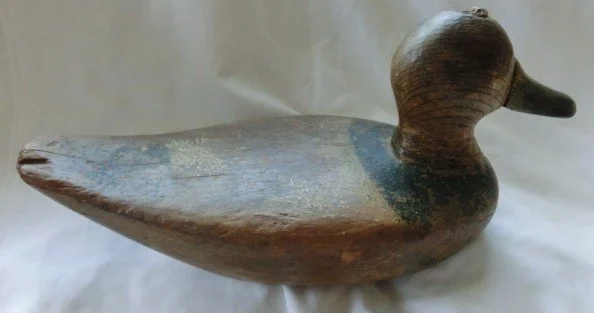
I don’t remember seeing any working decoys from Ted Hanks. His decorative carvings are varied and wonderful.
Victor Horn
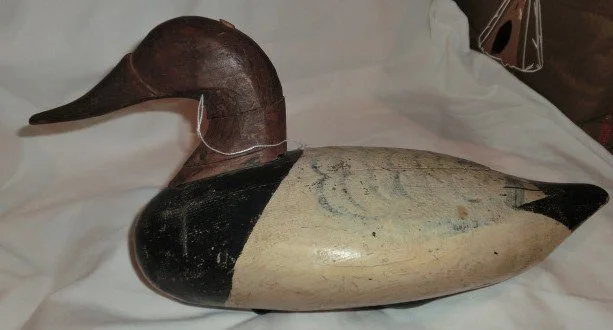
Gaylord Ivens
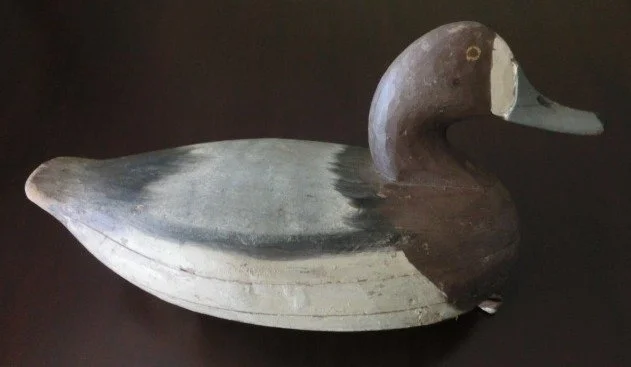
Ok, fine, He did not technically live in Talbot County but come on, it was a stones throw so I’m claiming him.
Robert Lambdin
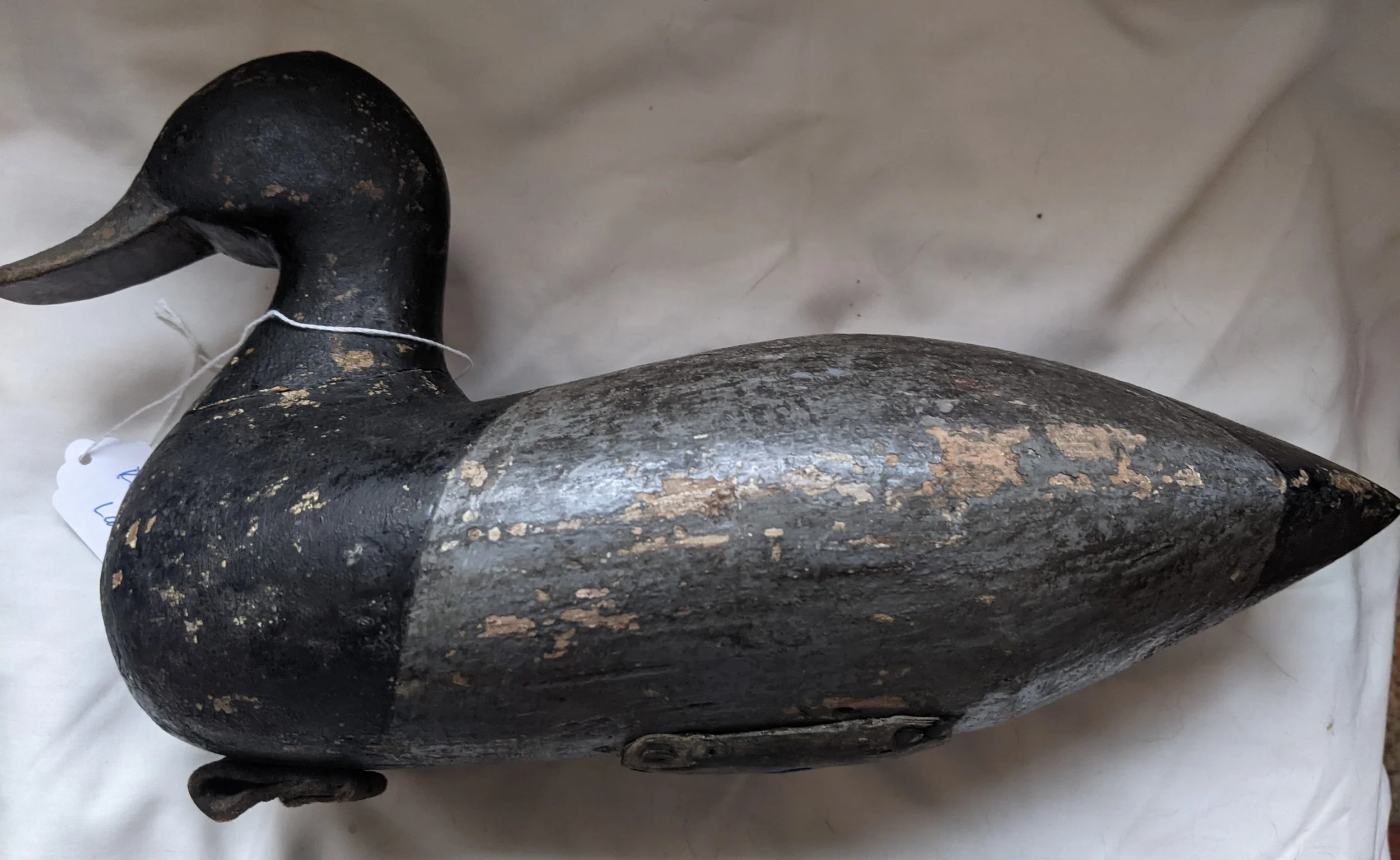
Clifton “Quacky” McQuay
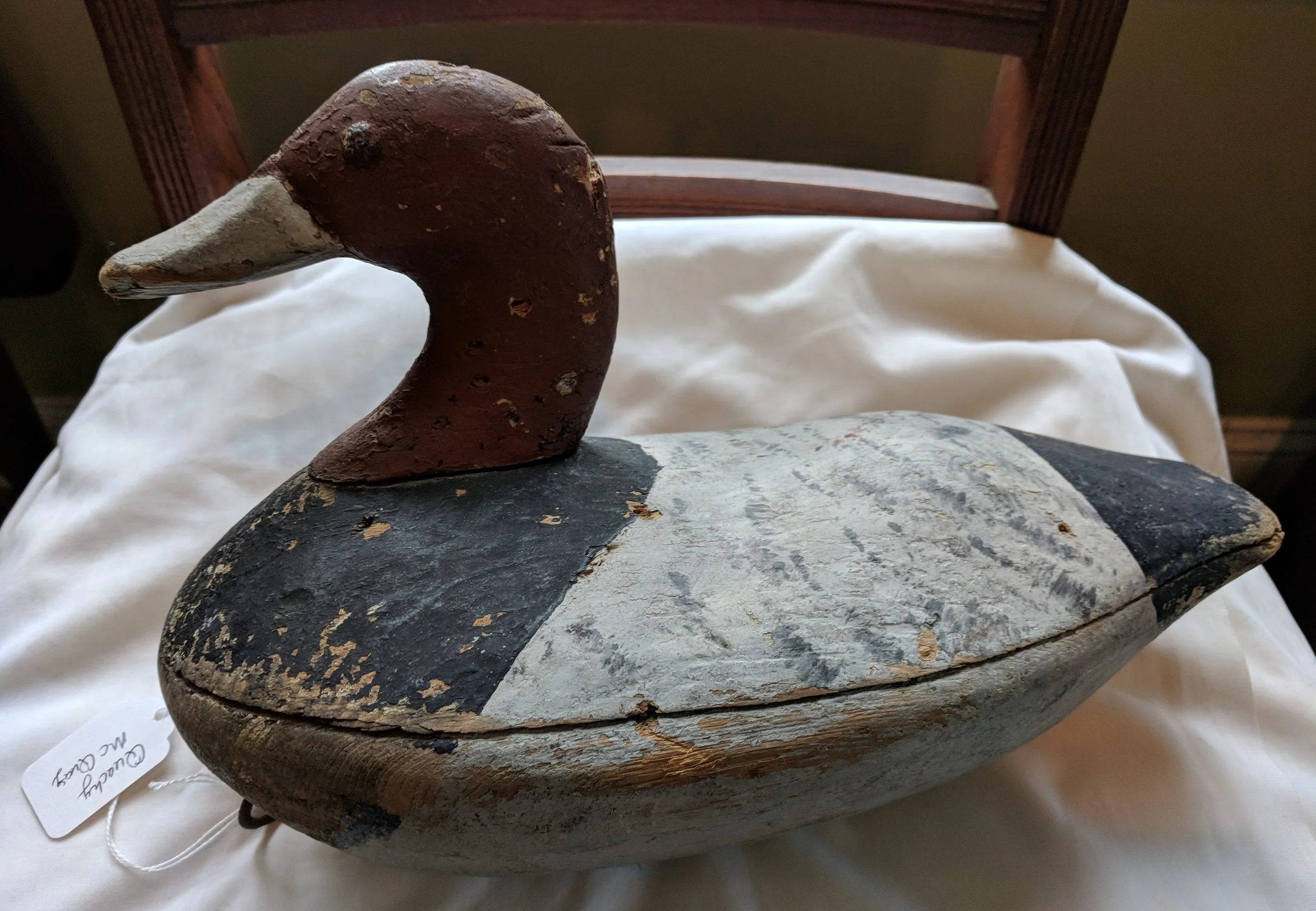
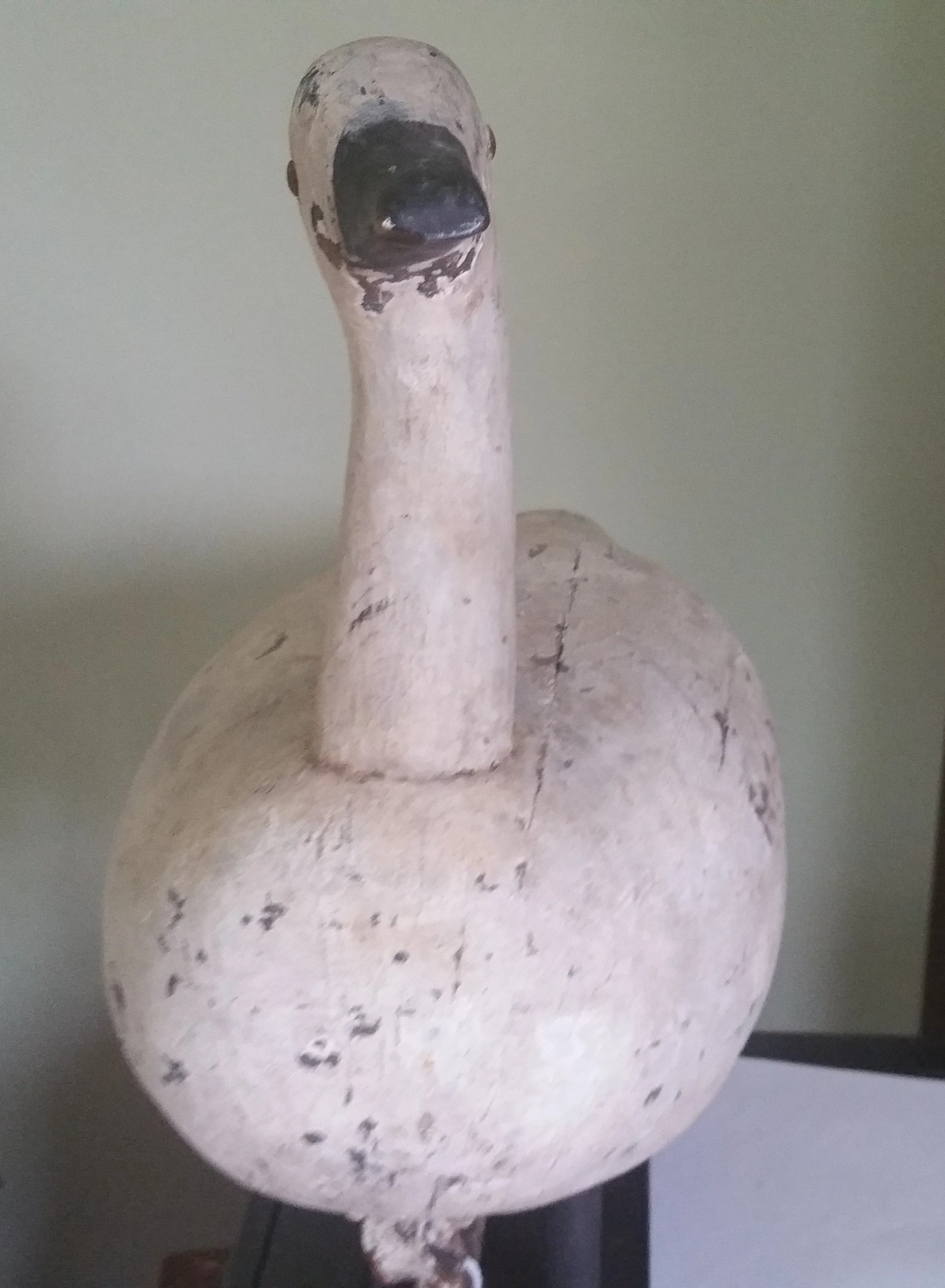
Frank Newnam
This is a one of Bluebill rig that he did late in his career.
A.C. Newman
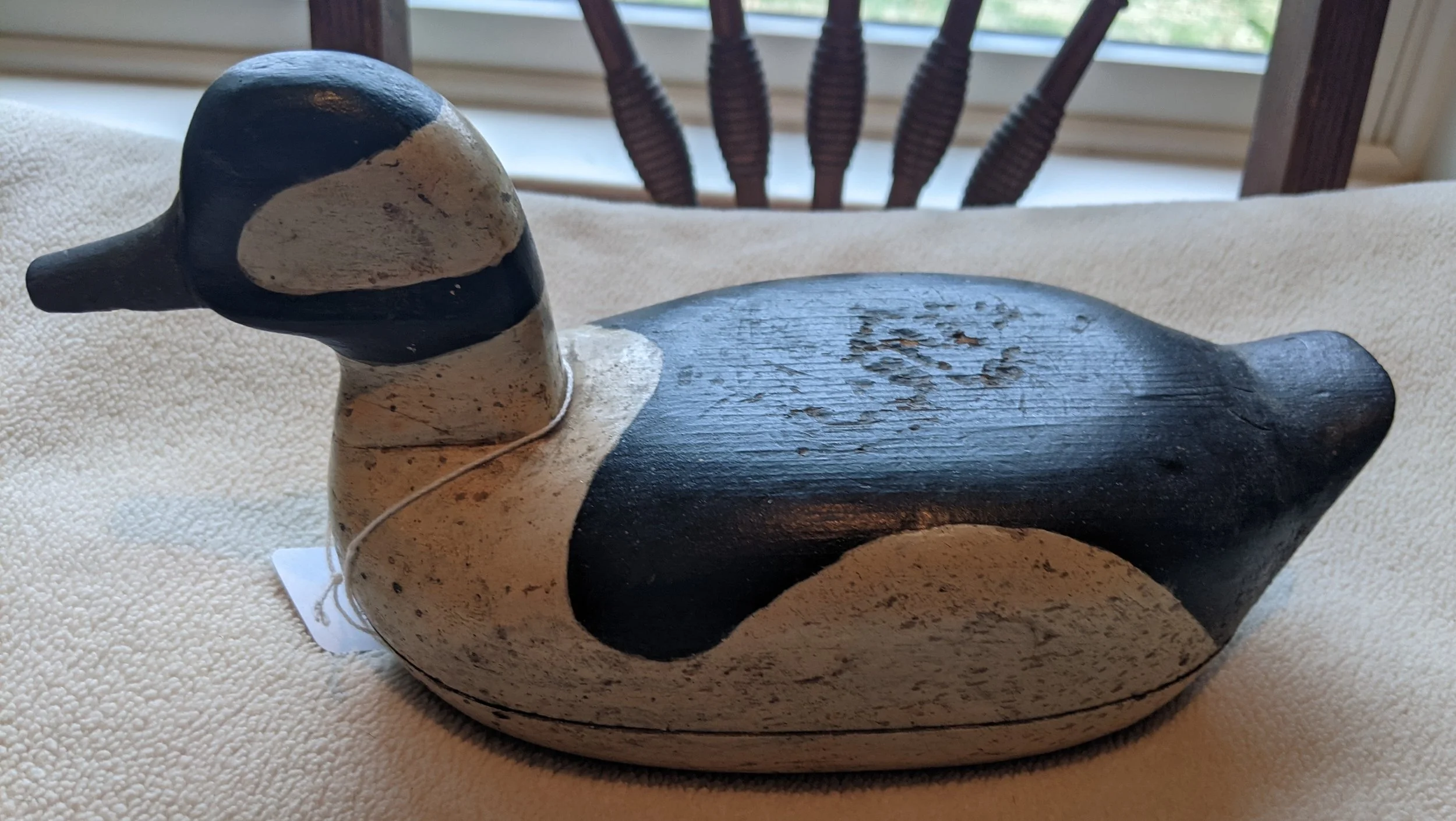
Ed Parsons
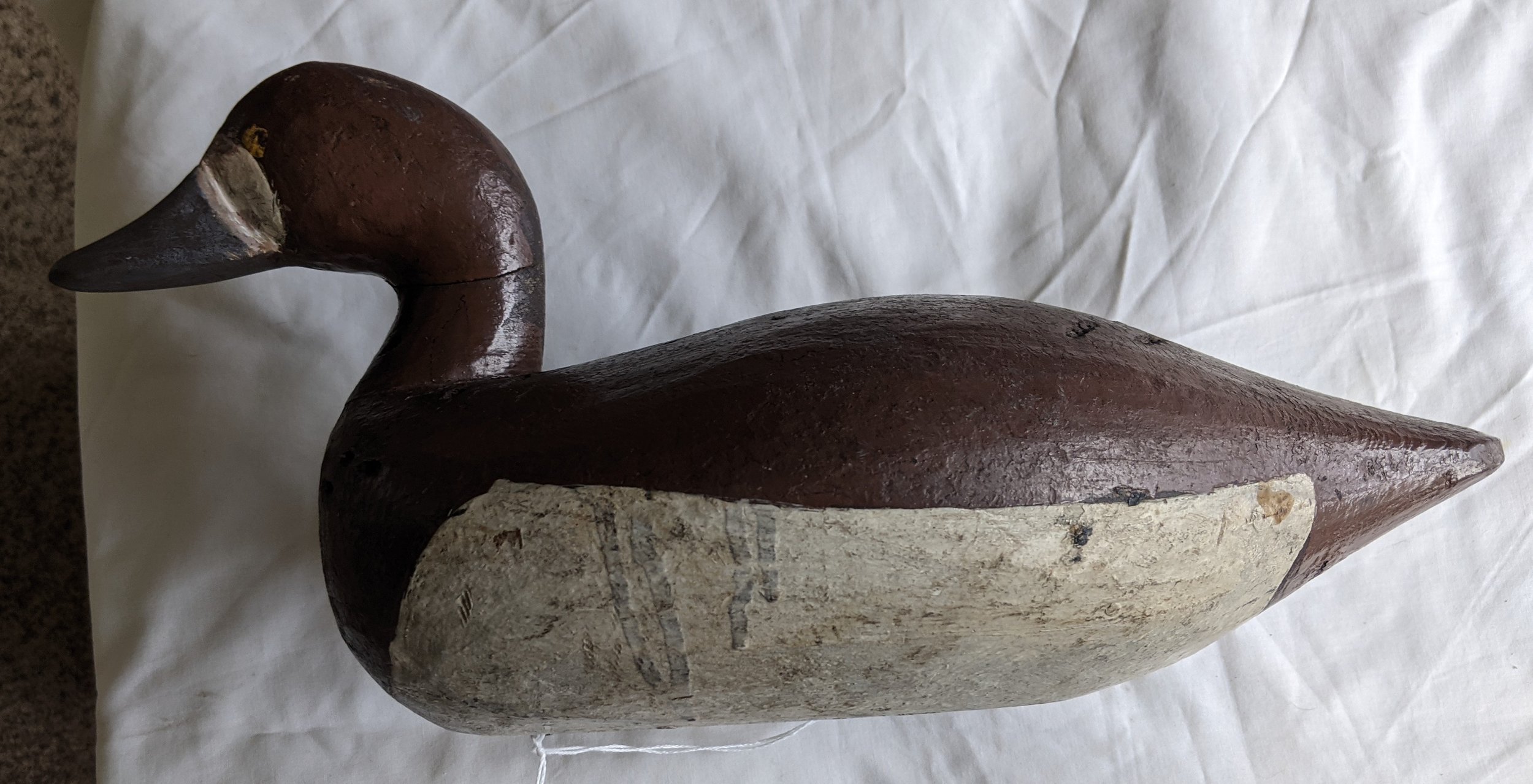
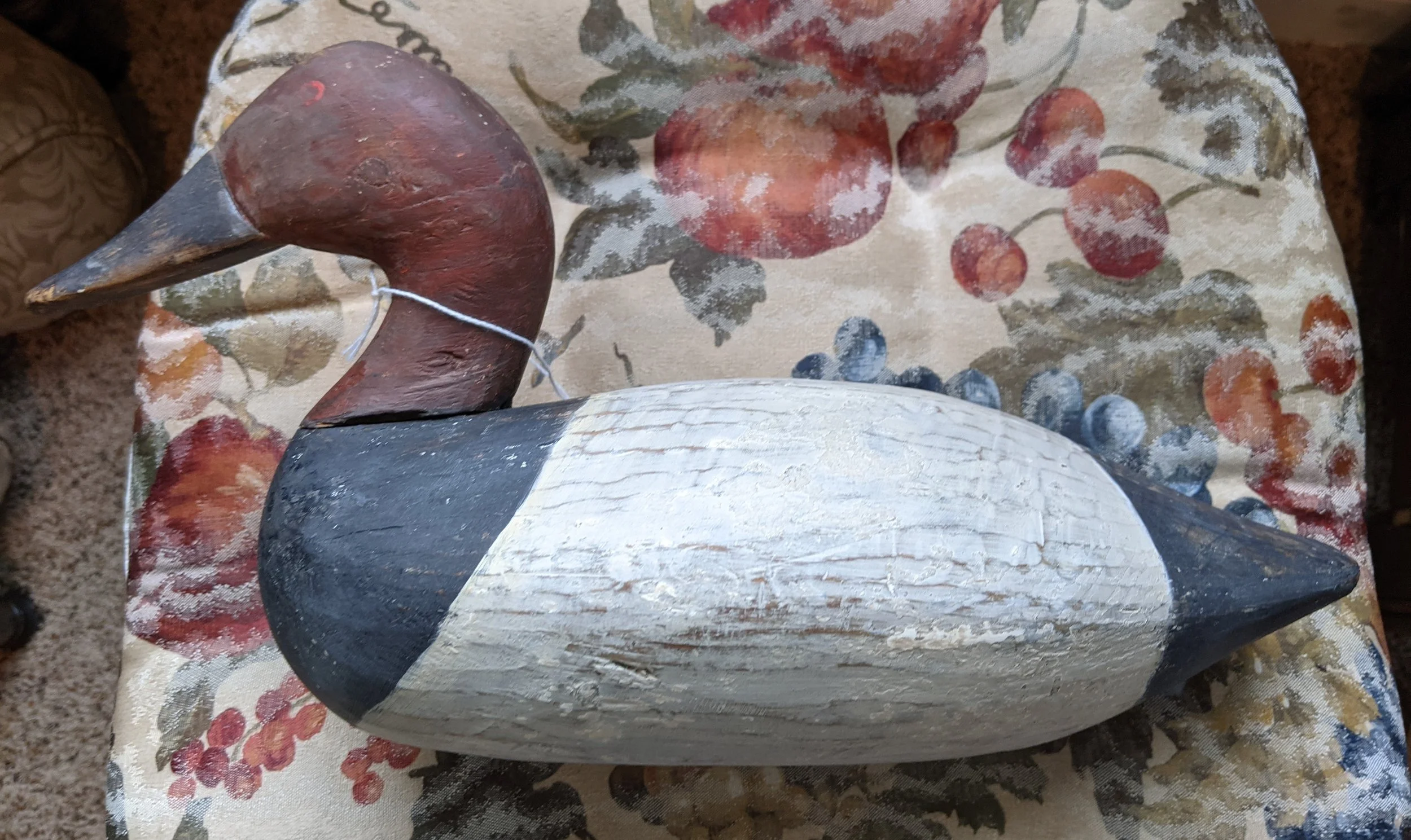
Undoubtfully, the most important Talbot carver
Pete Richardson
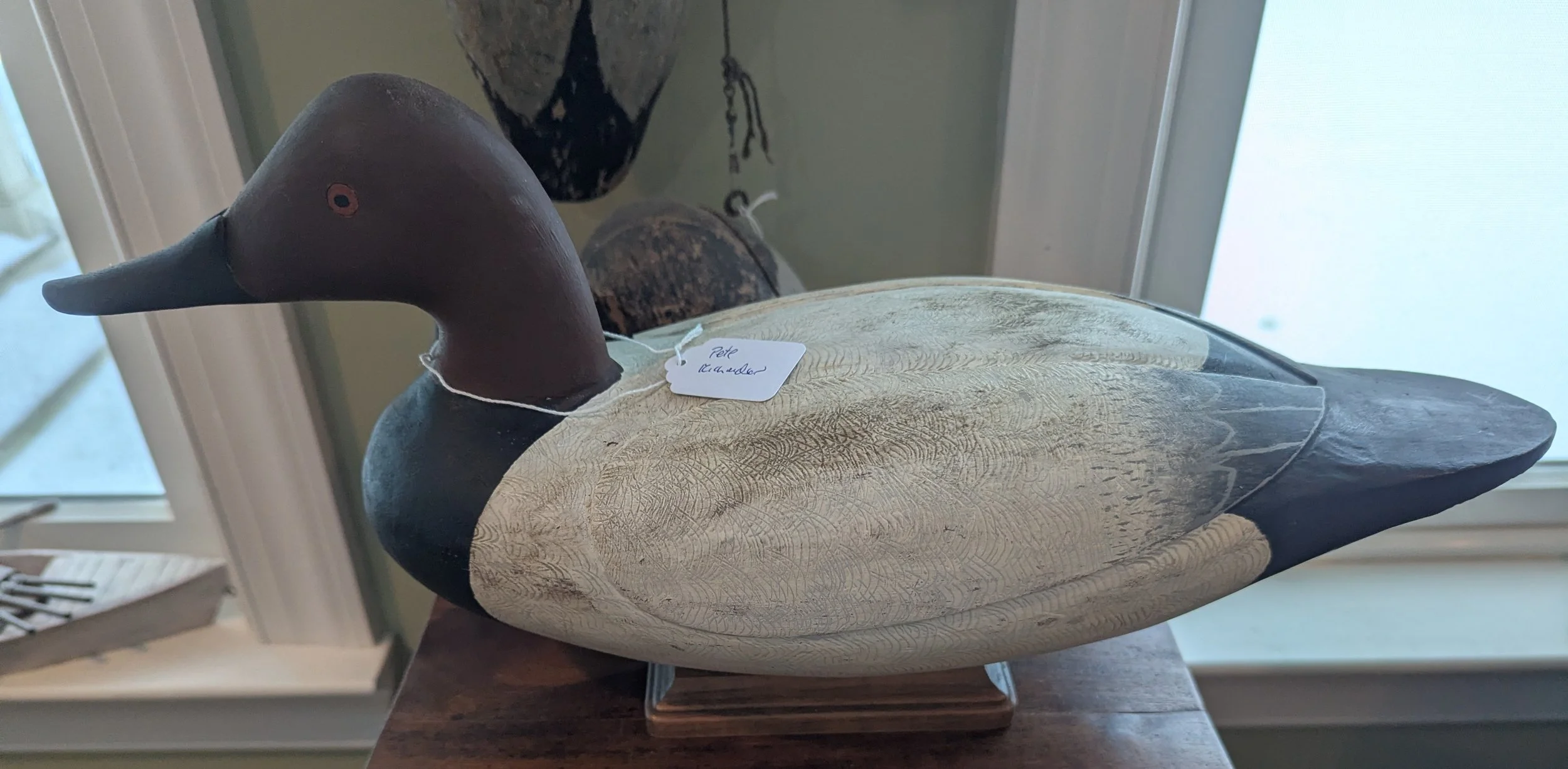
Richard Tilghman
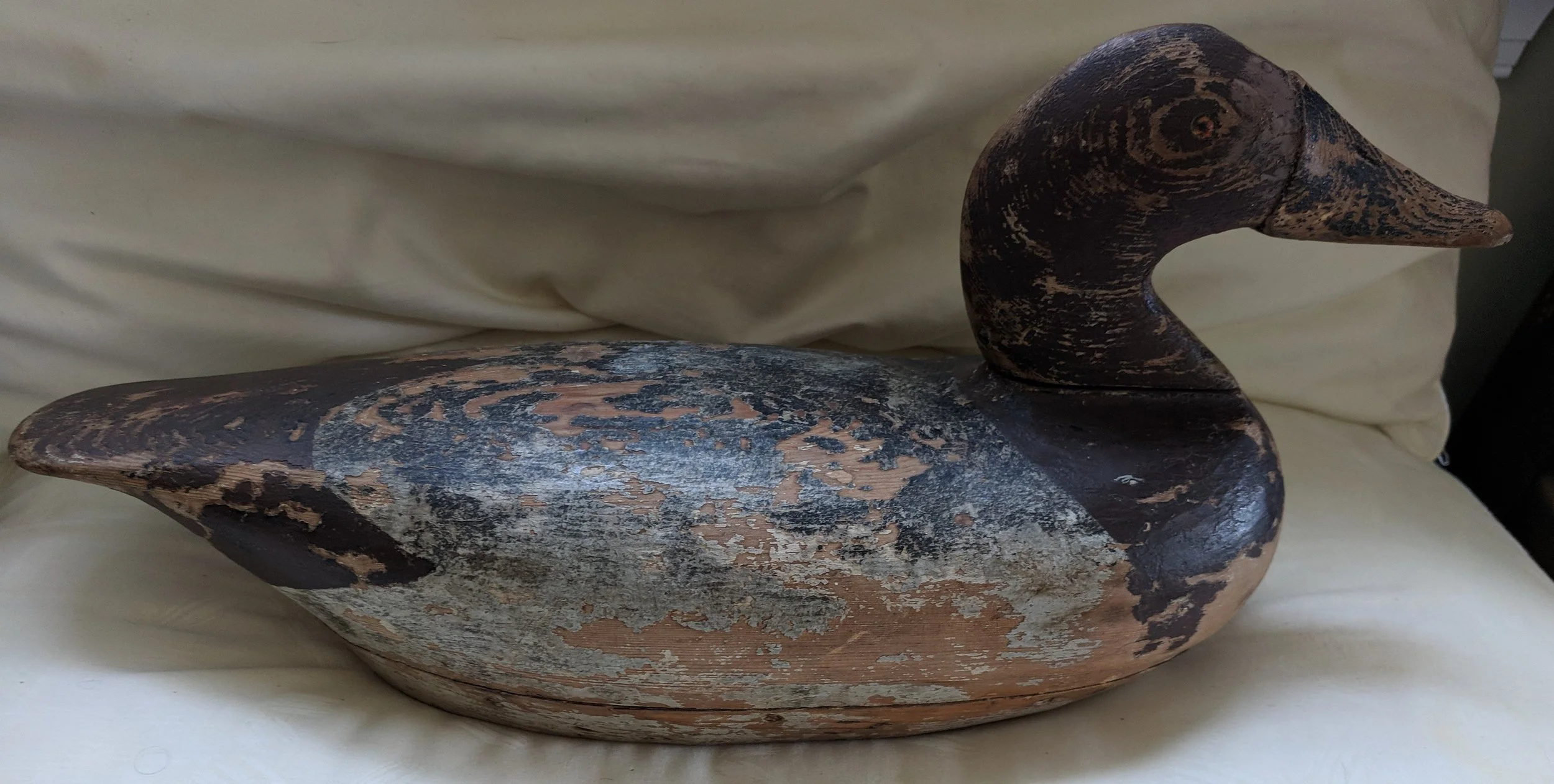
End of the Talbot County Decoy material
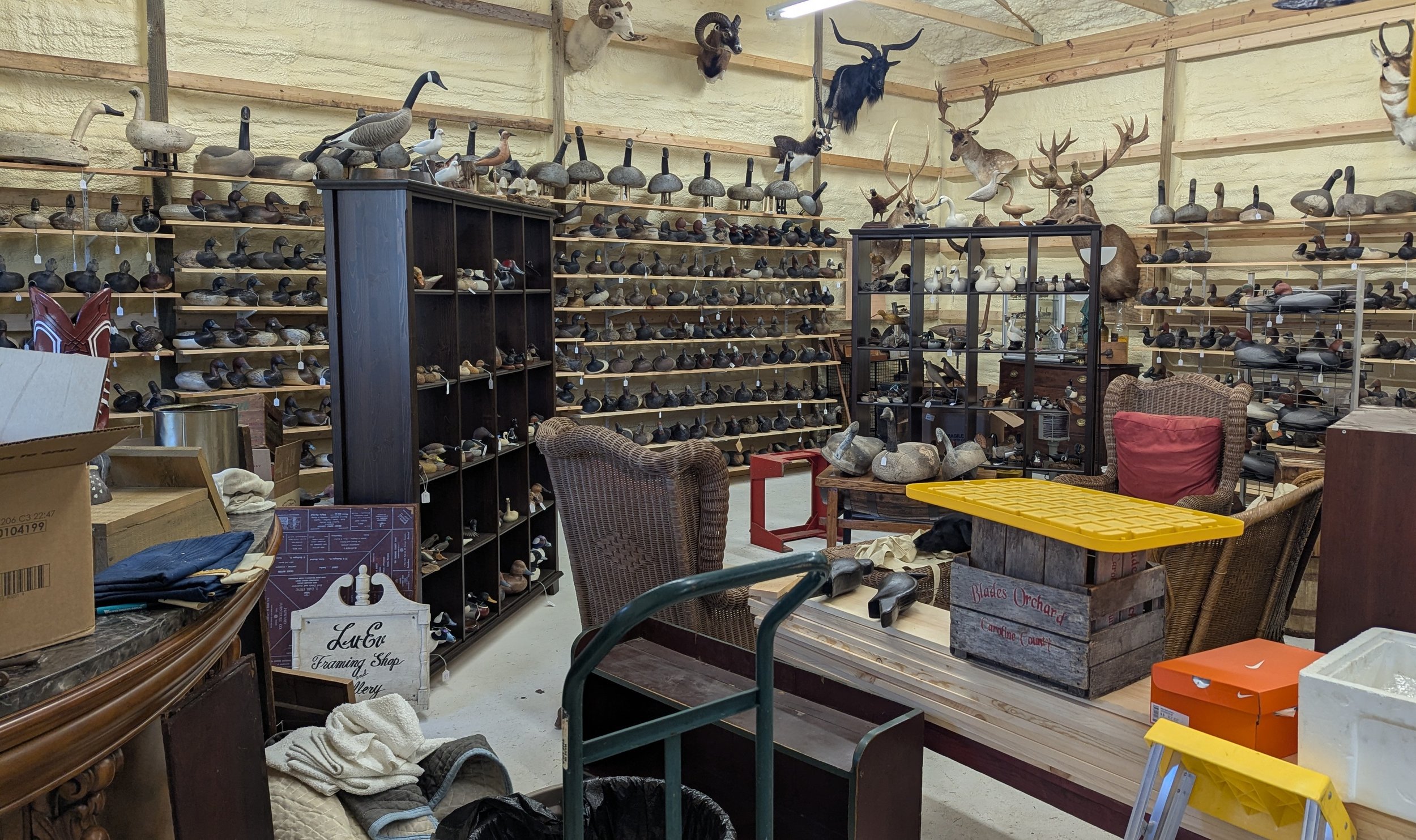
My Collection continues to grow. If you have some pieces for sale or show, I’d love to see them. Thanks
My Dad, George H. Meyer, wrote two books on American Folk Art that we have for sale.
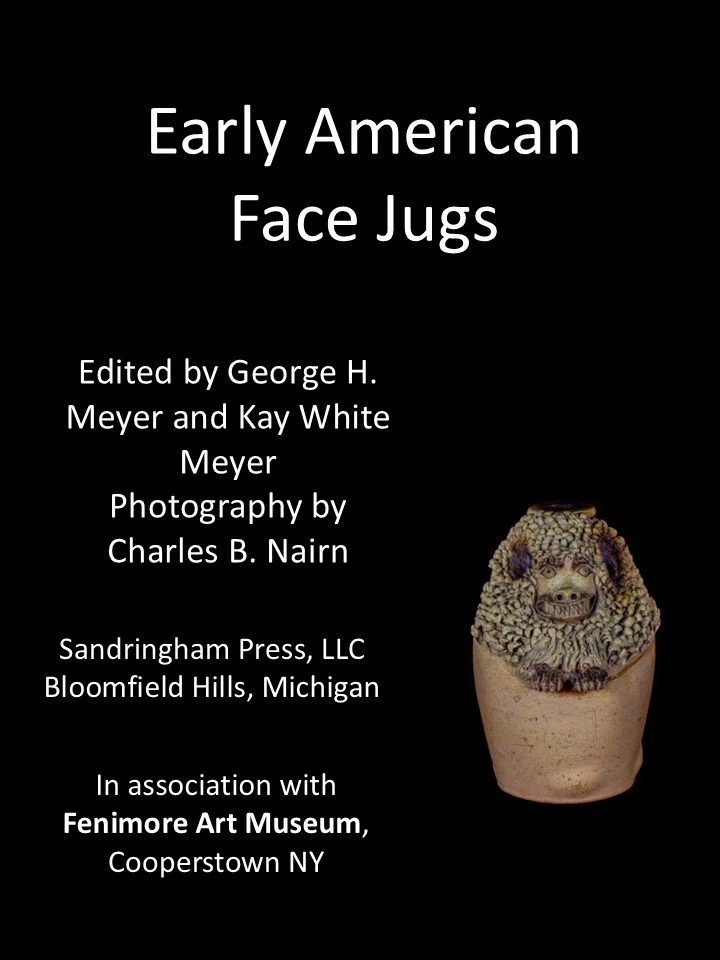
Early American Face Jugs
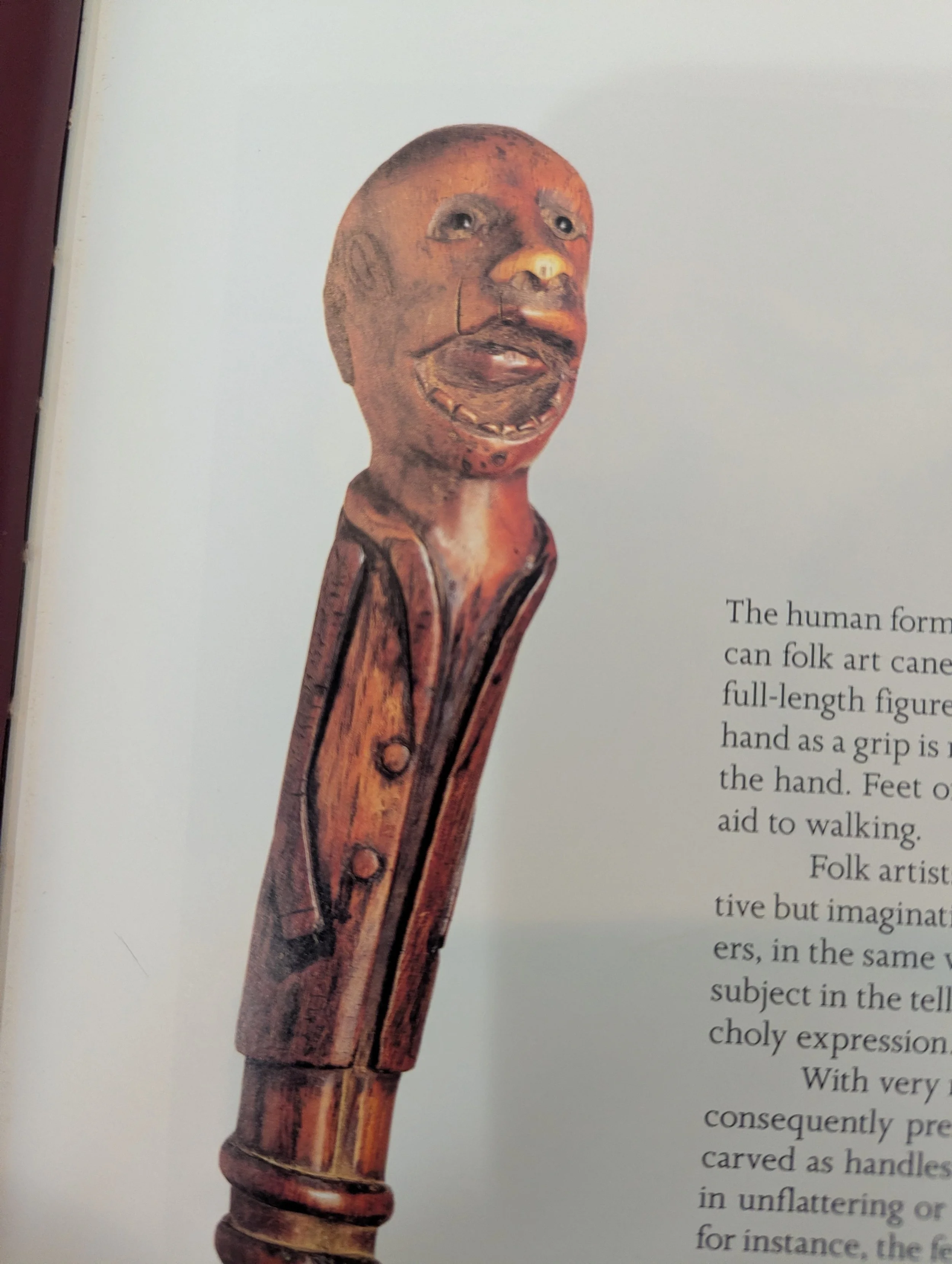
American Folk Art Canes, Personal Sculpture
George H. Meyer George H Meyer George and Kay Meyer Kay Palmer White Kay P. White Kay White Meyer Charles B. Nairn Charles B Nairn Early American Face Jugs face pots face pottery Grotesque jugs grotesque pots grotesque pottery ugly jugs ugly pots ugly pottery Folk art jugs folk art pots folk art pottery snake jugs snake pots snake pottery Anna Pottery Brown Pottery Crooksville Pottery Kirpatrick Pottery McAdams Pottery Miles Mill Pottery O Henry Pottery Palmetto Fire Brick Works Randolph Factory Stine Pottery Van Allen Pottery Watley Potters Ack Family Mark Baynham EG Beaty S Simeon Bray Brown family Charles Brown Charlie Brown Davis Pennington Brown Evan Javan Brown Louis Brown Otto Brown Thomas Chandler Burlon Craig Thomas Craft Erastus Crooks Guy Daugherty Dave the Slave Dave Drake David Drake Colonel Thomas Davis Charles Decker John Dollings Morris Dollings David Dorsey Matthew Duncan Matt Duncan George Washington Duncan Charles P Ferfuson Galloway Nathan E Gardner Owen Gaunt WTB Gordy Auburn Shuford Hilton Will Hewell Andrew Kirpatrick Cornwall Kirkpatrick Wallace Kirkpatrick Dr. Abner Landrum BF Landrum Landrum Pattory Reverend John Landrum Rev Lisk Henry DcMermitCasey Meaders Cheever Meaders Lewis Miles Harvey Enoch Reinhardt Henry Remmey Richard C Remmey Abner Duncan van Allen Alabama face jugs Al Alabama pottery Alabama pots Conn CT Connecticut Face Jugs Pottery Pots Georgia face jugs pottery pots Anna Illinois IL IN Indiana Face Jugs Pottery Pots KY Kentuck face jugs pottery pots Baltimore Maryland MD face jugs pottery pots MO Missouri face jugs pottery pots Mississippi MS face jugs pots pottery New York face jugs pots pottery North Carolina NC Arden Catawba County Lincoln County Vale White County OH Ohio Licking County Middlebury Muskingum County Perry County Summit County Wayne County Pennsylvania PA face jugs pottery pots Montgomery County Montour County Phildelphia South Carolina SC face jugs pottery pots Aiken Bath Bethune Edgefield Districk Horse Creek Stoney Bluff Trenton Tennessee TN Texas TxAbout the Editors
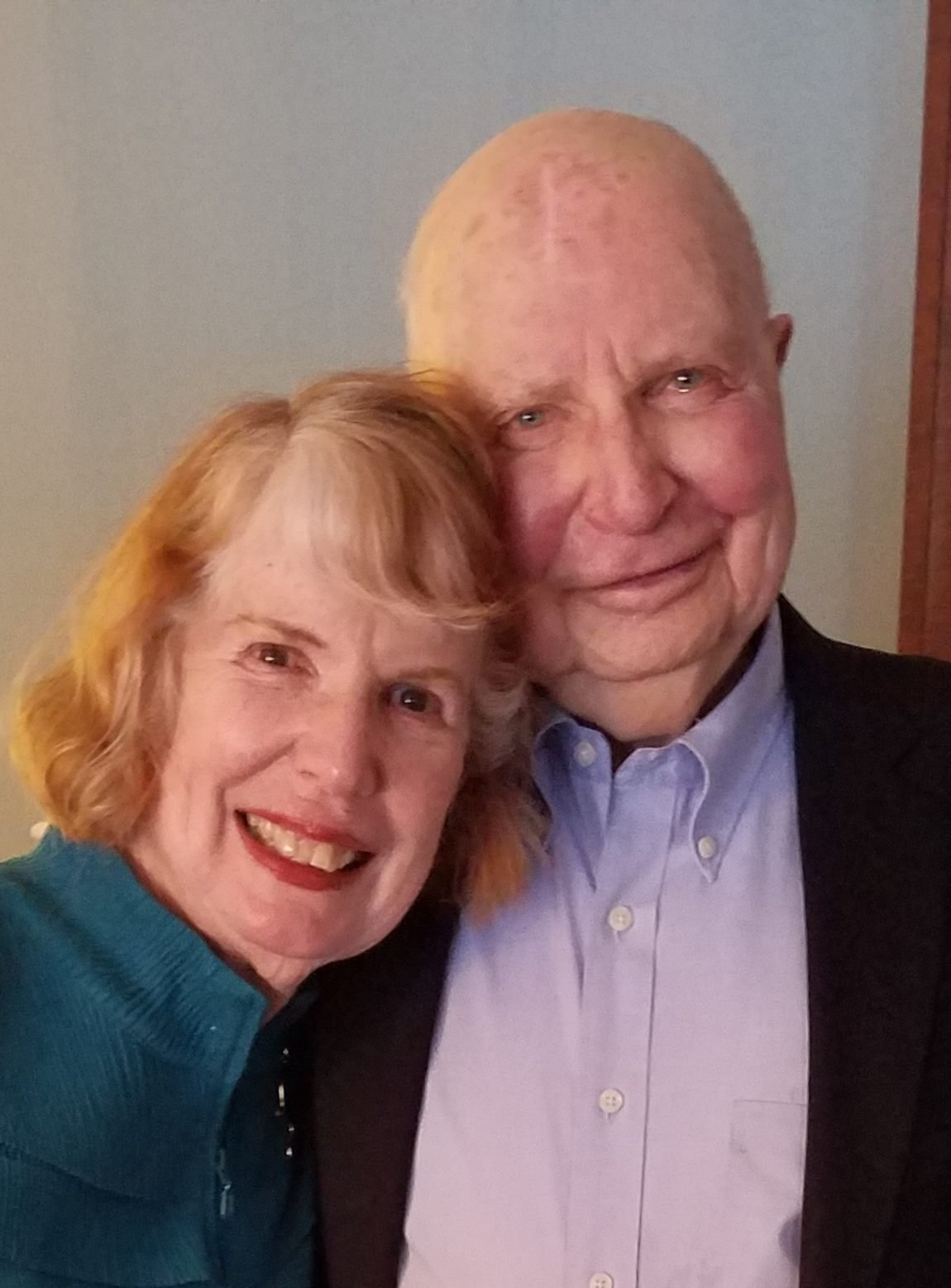
George and Kay White Meyer collected folk art since the early 1970s and ceramic face jugs since 1980 until George’s passing in 2021. They are the authors of two other books on art, the Folk Art Bibliography and Personal Sculpture, Folk Art Canes.
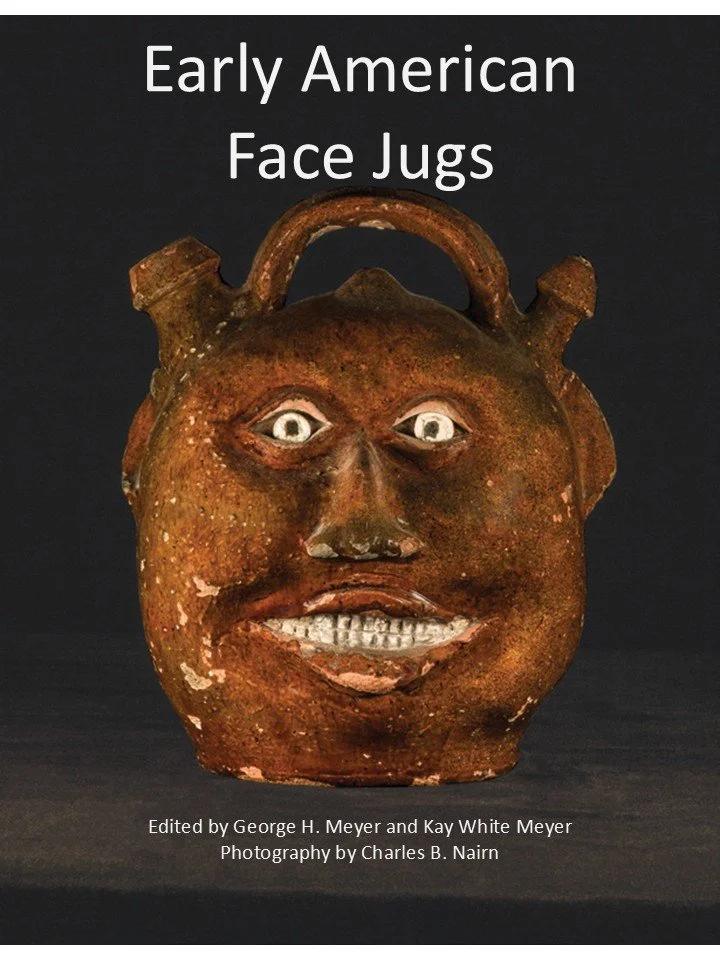
Early American Face Jugs, George H. Meyer and Kay P. White
$45 plus $7.50 shipping
The Meyer Collection
June 18, 2019
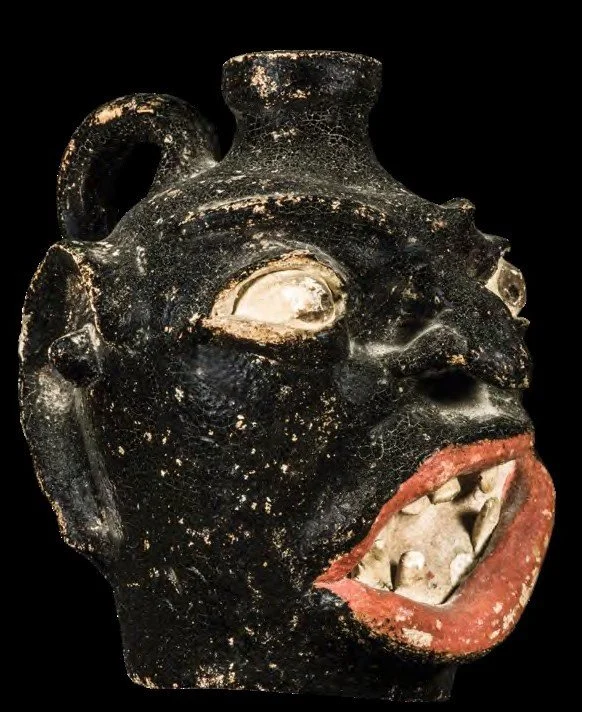
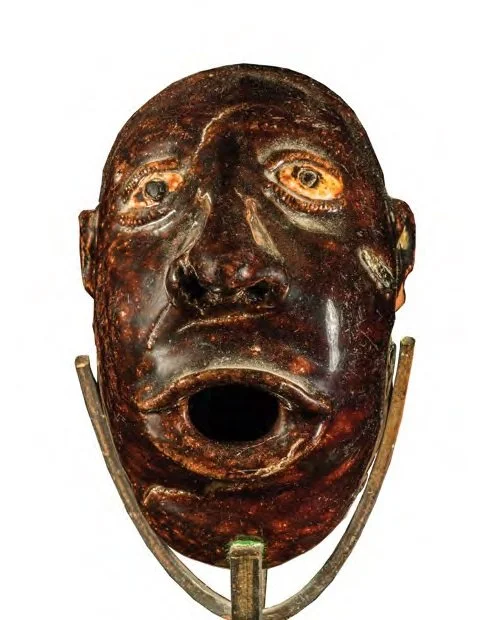
Face jugs are mysterious, alluring, interesting portraits in clay that are just beginning to be understood within a historical and geographical perspective. George Meyer acquired more than 100 ceramic objects over 35 years, assembling a stunning collection of traditional American face jugs from all areas east of the Mississippi. Many of these objects have not been seen before.
The personal photography of each object in this book shows the artistic merit of the face jug tradition. In addition, the arrangement of the chapters by geographical areas explains that these potters were not artists working in isolation, but rather were interrelated craftsmen sharing ideas and techniques in a variety of ways. Relationships and connections are explored. In addition to a large number of Early Edgefield, South Carolina, vessels, Northern, Mid-Western and Southern jugs are shown, displaying a tremendous variety of materials and techniques.
Early American Face Jugs
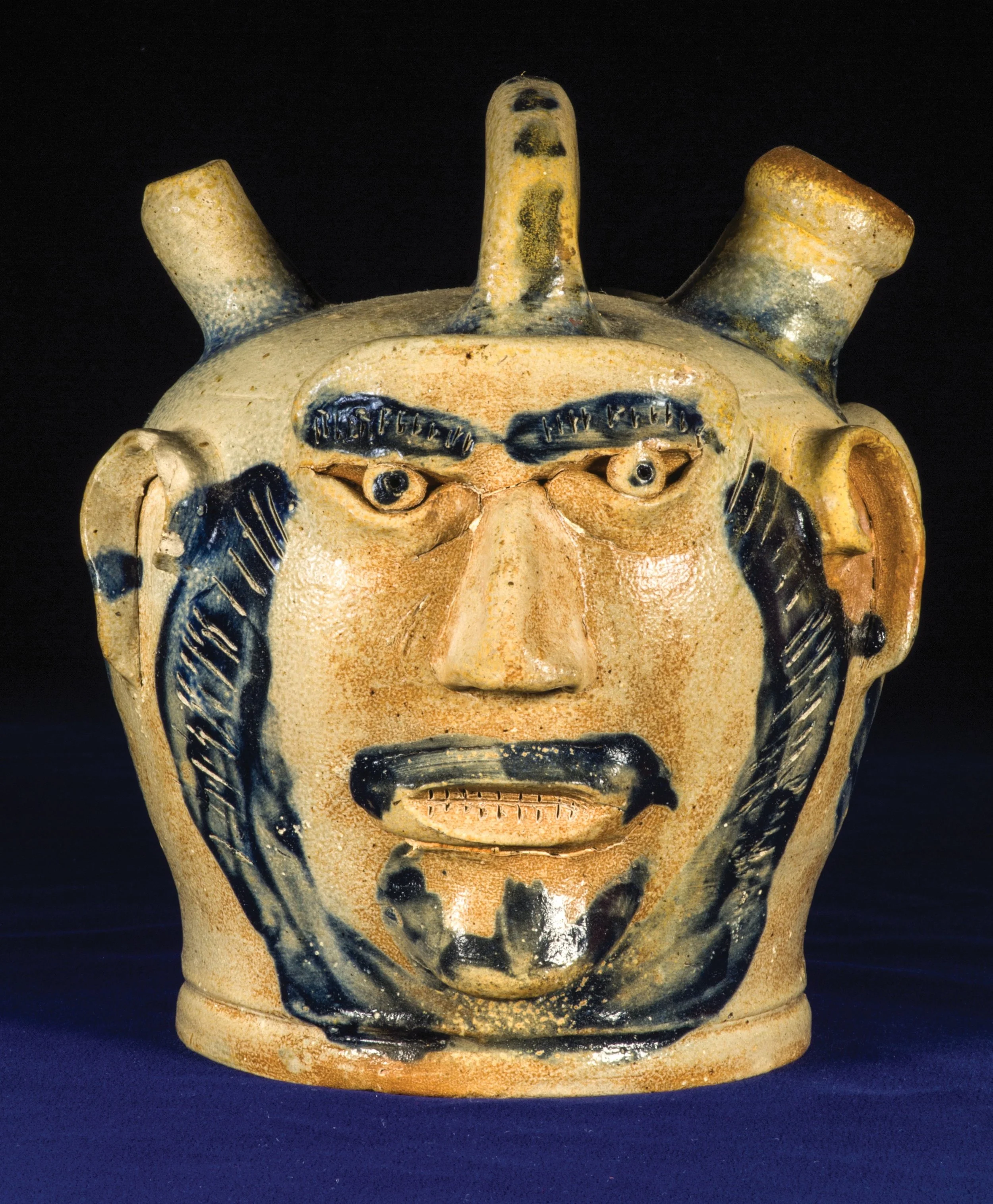
Essays also shine light on the development of the jug and the artistic quality of the traditional face vessel. The history of the face jug is complex and differs from area to area. Both the written explanation and the photographs illustrate similarities and differences in face jug production.
A chapter on related figural objects shows the variety of forms in which vessels were produced. From the amazing works from the Anna Pottery to the more simple but powerful snake jugs, the range of traditional potters is displayed for all to enjoy.
Early American Face Jugs breaks new ground by revealing the artistic merit of each vessel while displaying the “personality” of these fascinating objects.
George Meyer is noted for finding and collecting sculpture long before the art is appreciated. His book, American Folk Art Canes Personal Sculpture pictured the imaginative treatment of a stick of wood. Early American Face Jugs is the result of 35 years of carefully assembling a stunning collection of face jugs and related pottery from about 1840 to 1950. Each object has been carefully photographed by award winning photographer, Charles Nairn. The combining of Mr. Meyer’s keen eye with the organization of the vessels by region brings the history and artistic value of these once overlooked objects into the place of honor in the art world that they deserve.
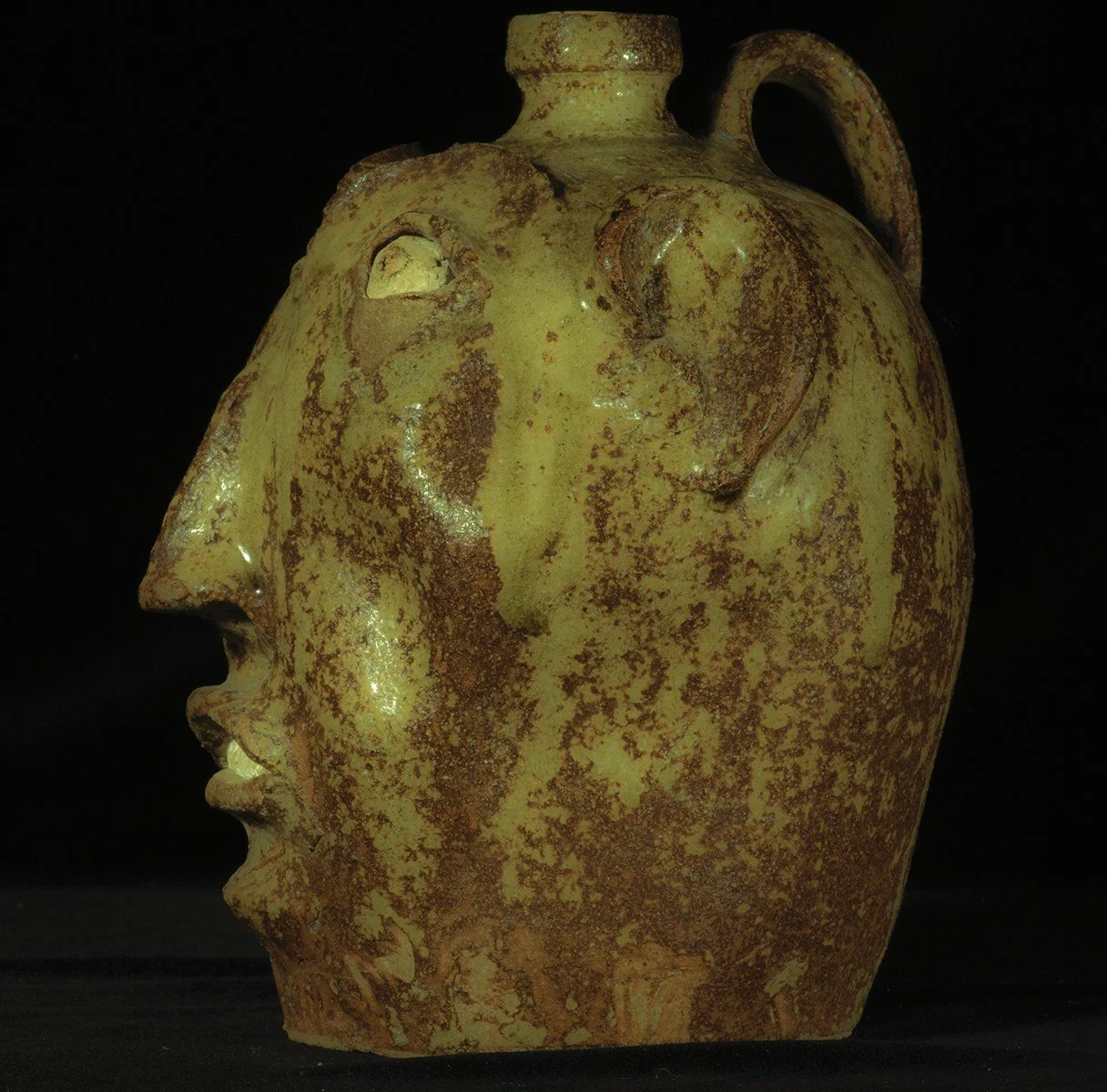
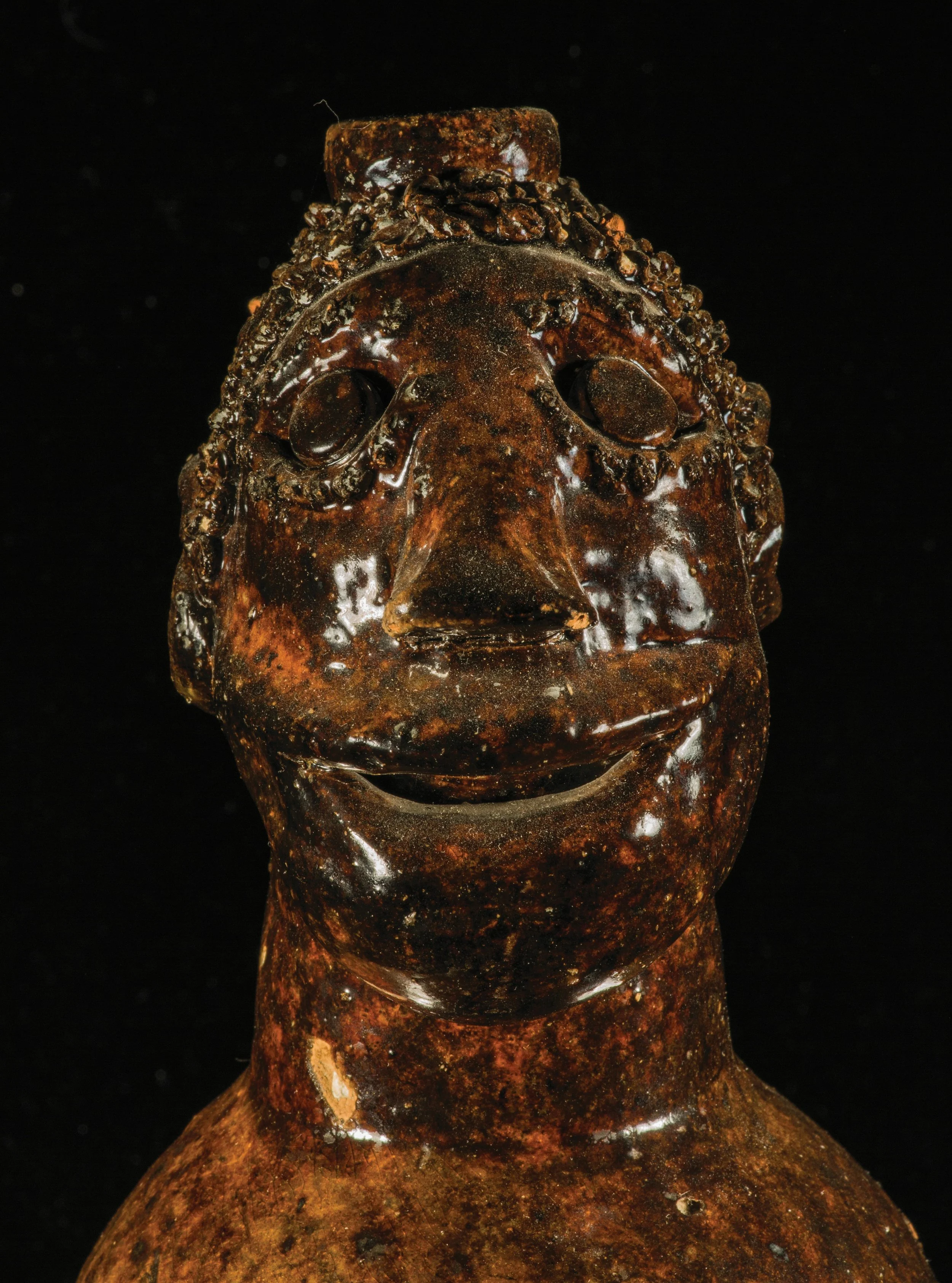
Early American Face Jugs
$20 plus $7.50 shipping
Selling Dad’s book
Author and prominent folk art collector George H. Meyer was among the first to recognize that American folk art canes are works of art in their own right. Mr. Meyer was the editor of Folk Arts Biographical Index (1987) and Early American Face Jugs (2019)
American Folk Art Canes: Personal Sculpture is the first comprehensive, scholarly book focusing on American folk canes and will be a foundation for future research in the field. Reproduced in full color, more than three hundred canes dating from the early nineteenth century to today disclose the complex cultural meaning, obscure individual histories, and light-hearted social commentaries of folk art walking sticks. Detailed, comparative, and historical photographs show the diverse styles, techniques and themes used y the generations of American carvers who have mastered this expressive and utilitarian art form. Each illustration eloquently demonstrates the carvers' artistry in transforming a simple functional object into a work of art.
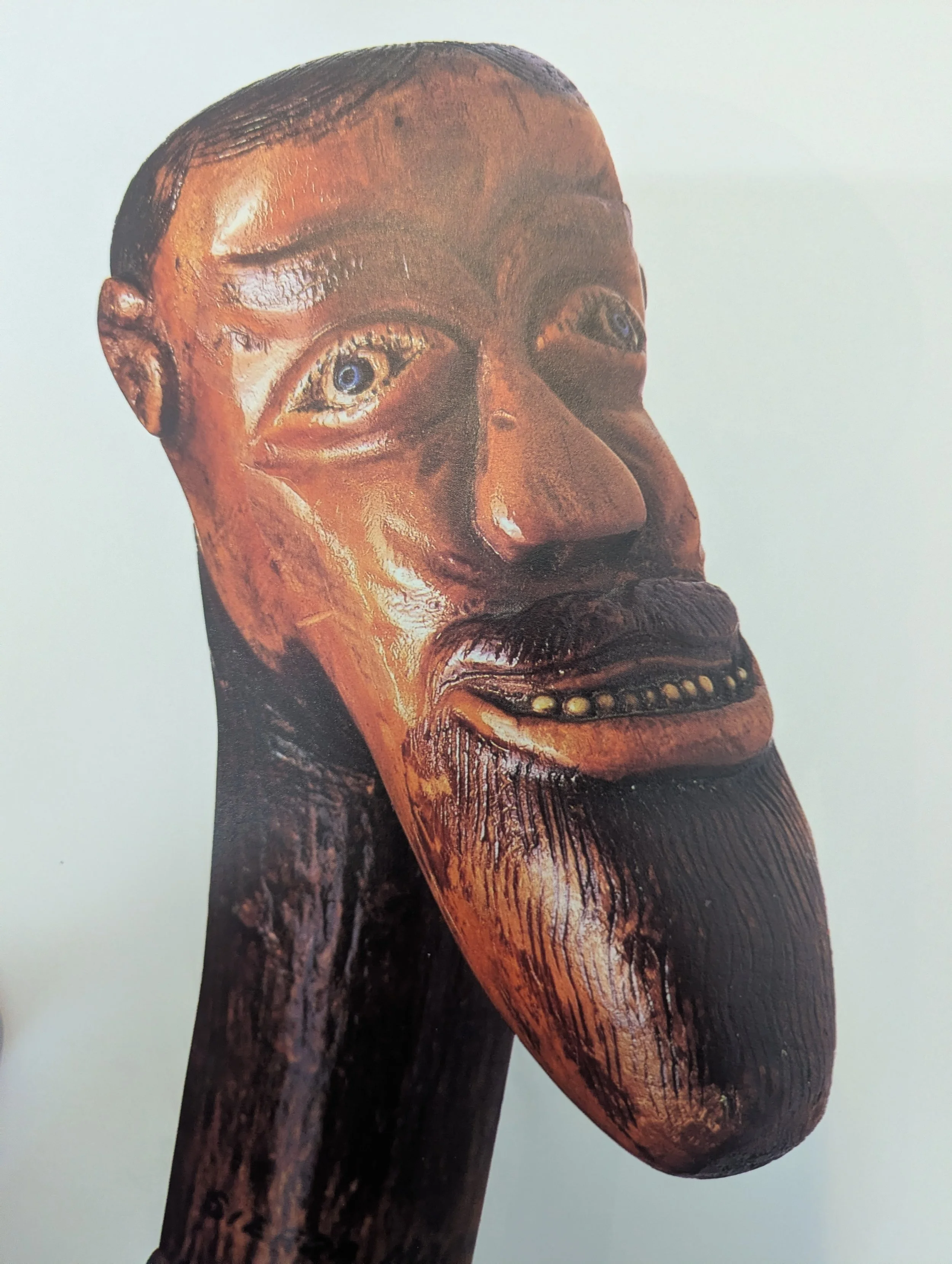
American Folk Art Canes, Personal Sculpture, George H. Meyer and Kay P. White
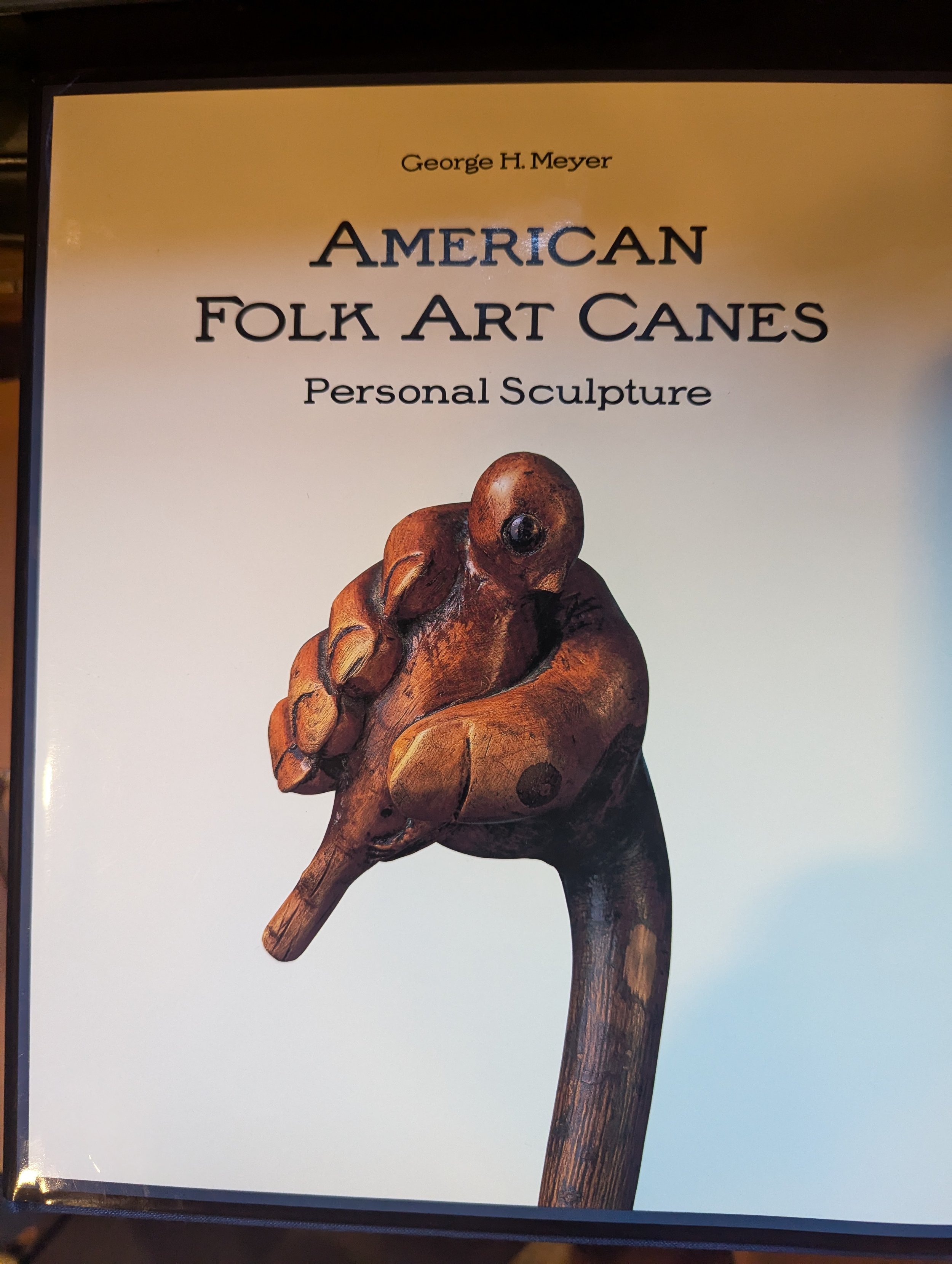
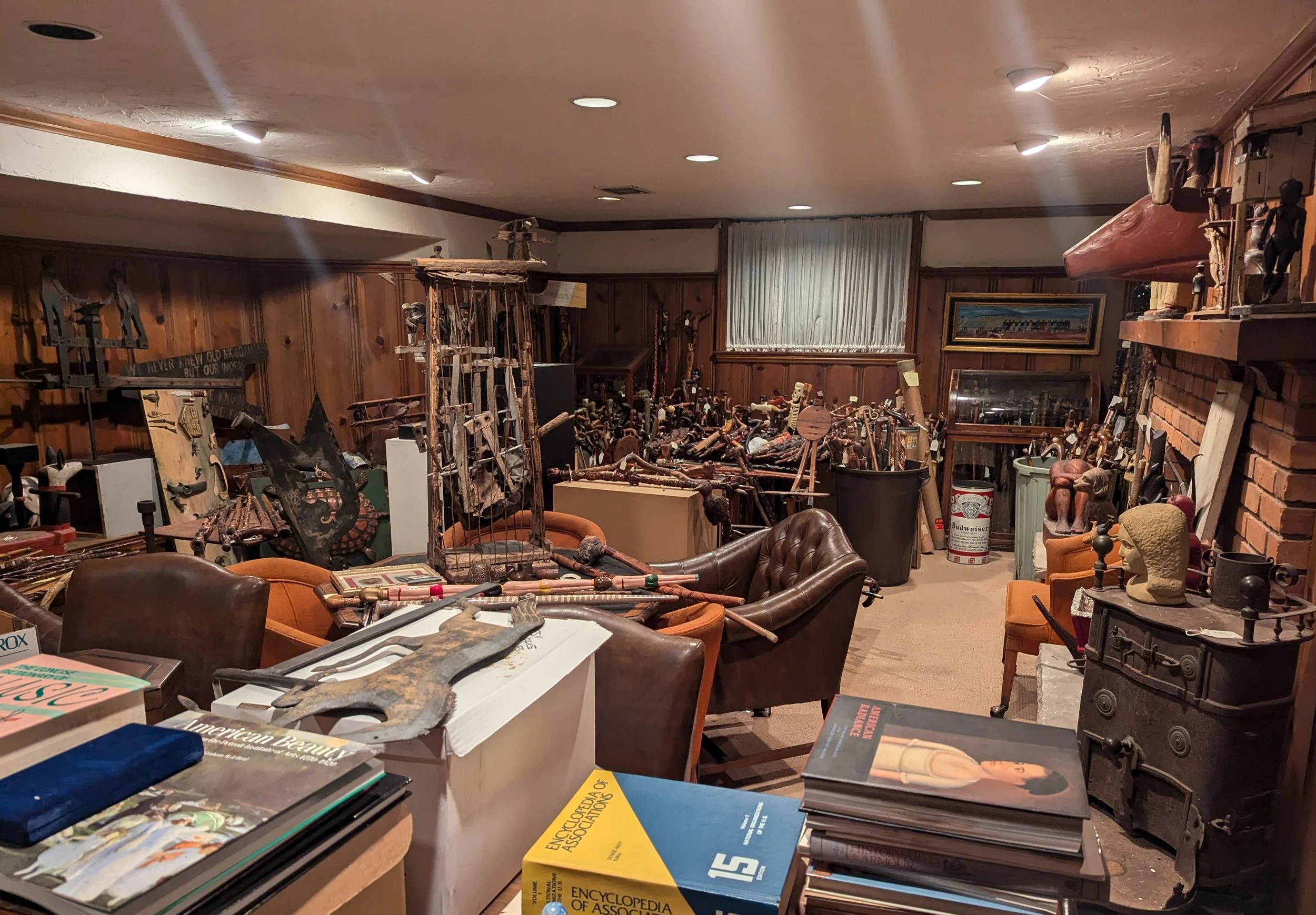
George Meyer George H Meyer George H. Meyer Kay Palmer White Kay P White Kay P. White Kay White Meyer Charles B. Nairn Charles B Nairn Charles Nairn American Folk Art Canes Personal Sculpture American Folk Art Walking Sticks Sandringham Press Sandringhampress.com Editor@sandringhampress.com antique folk art canes walking sticks contemporary folk art canes walking sticks civil war canes walking sticks fraternal folk art canes walking sticks snake canes walking sticks, patriotic canes walking sticks Mike Orion Mike Cribbins African American canes walking sticks American Indian canes walking sticks mason canes walking sticks Ferrule canes walking sticks Odd fellows canes walking sticks masons canes walking sticks Thomas Jefferson Davis canes walking sticks John Bellamy canes walking sticks RM Foster canes walking sticks R.M. Foster canes walking sticks Denzil Goodpaster canes walking sticks Stick Dog Bob canes walking sticks John Simmons John Schtockschnitzler canes walking sticksHand-carved canes are a part of American’s culture and art, speaking to our rich national heritage and capacity for self-expression. As vehicles of personal communication and group identify, American folk art canes display images ranging from King Kong to depression-era bathing beauties, from boxer “Gentleman Jim” Corbett to an anonymous shoemaker, and from a Civil War soldiers to Dolly Parton. Symbols of fraternal and military organizations also occupy the miniature word on the cane, as do representations of nature, from snakes swallowing frogs to bill-filled gardens.
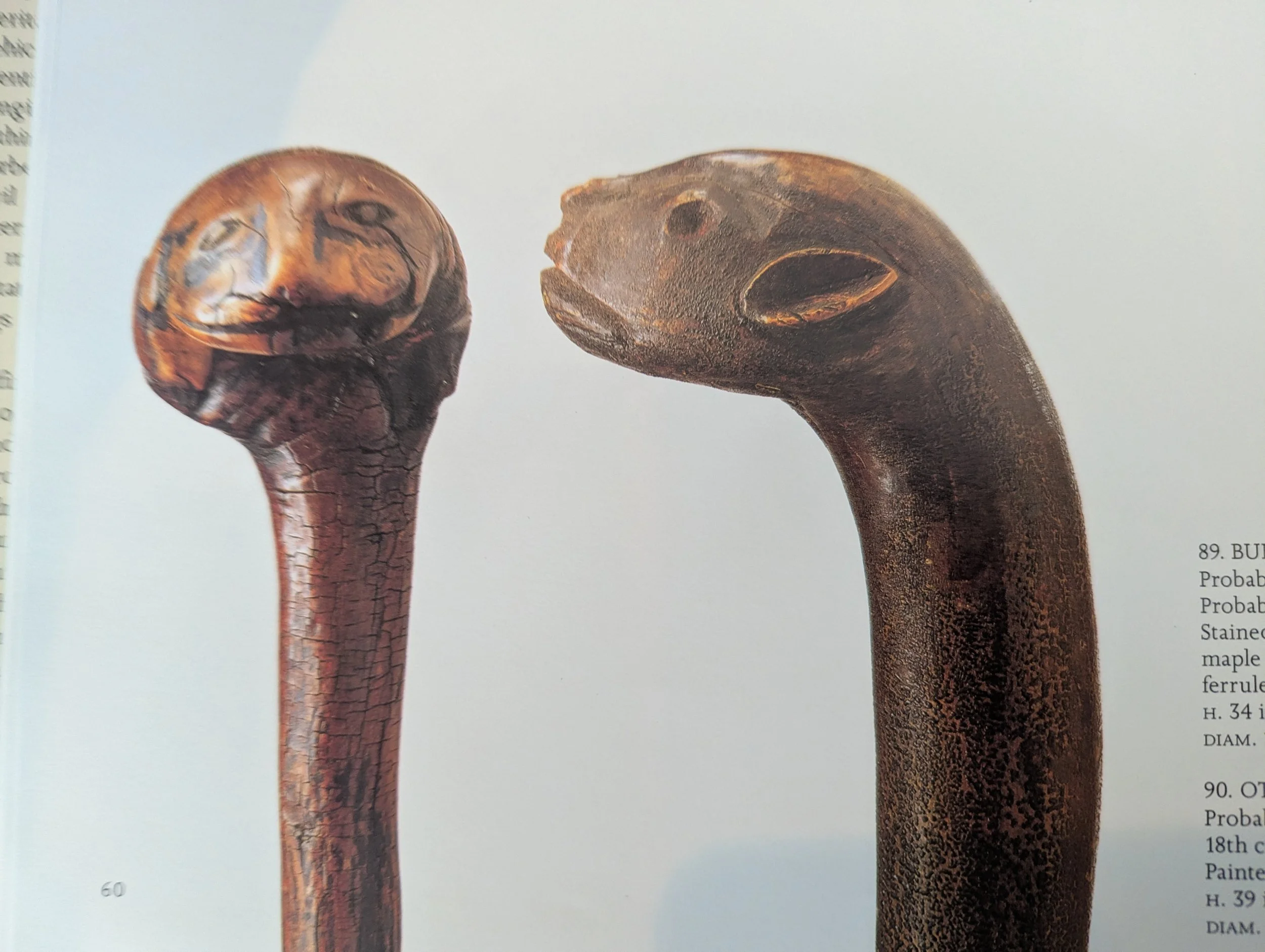
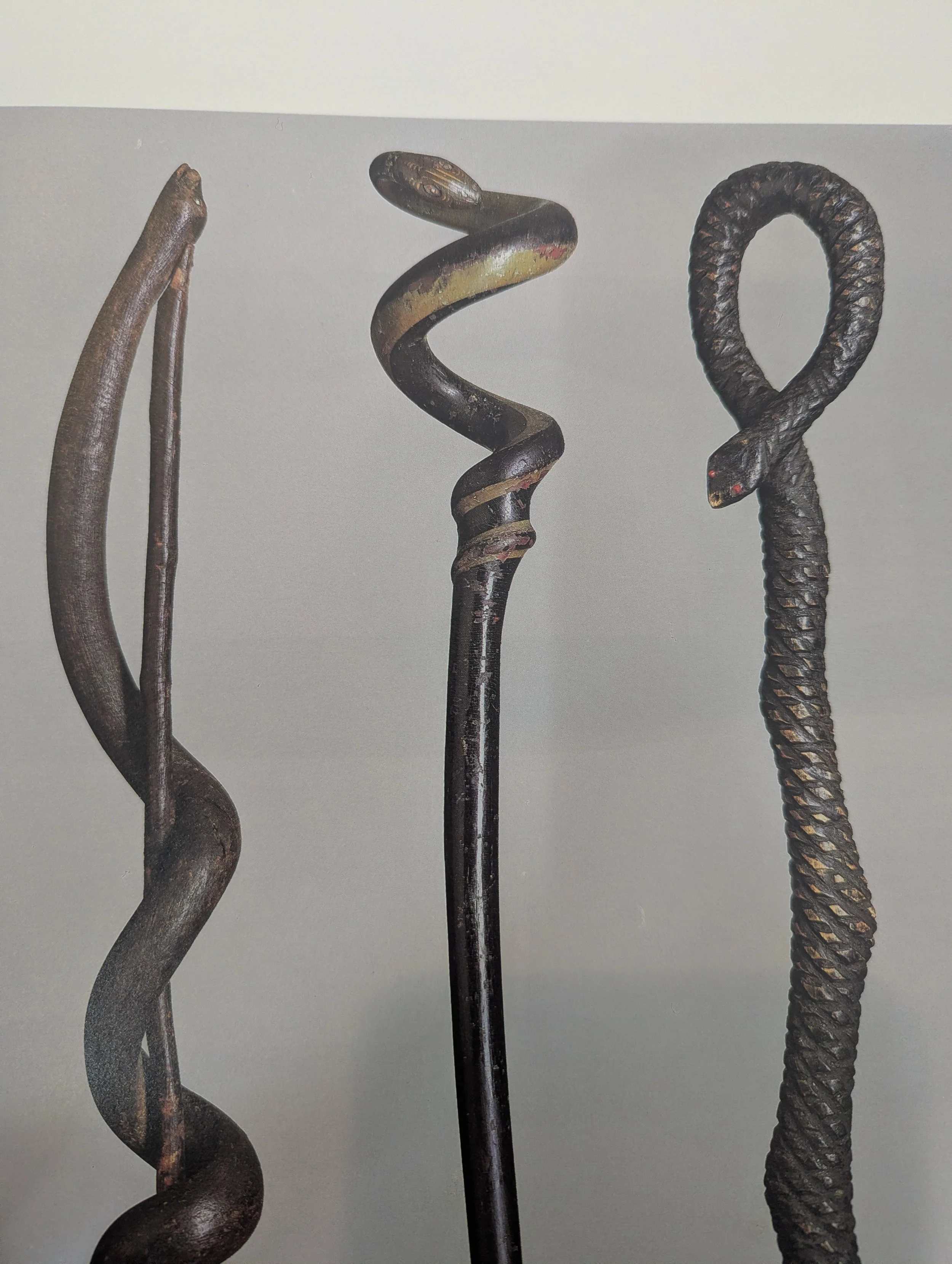
American Folk Art Canes, Personal Sculpture
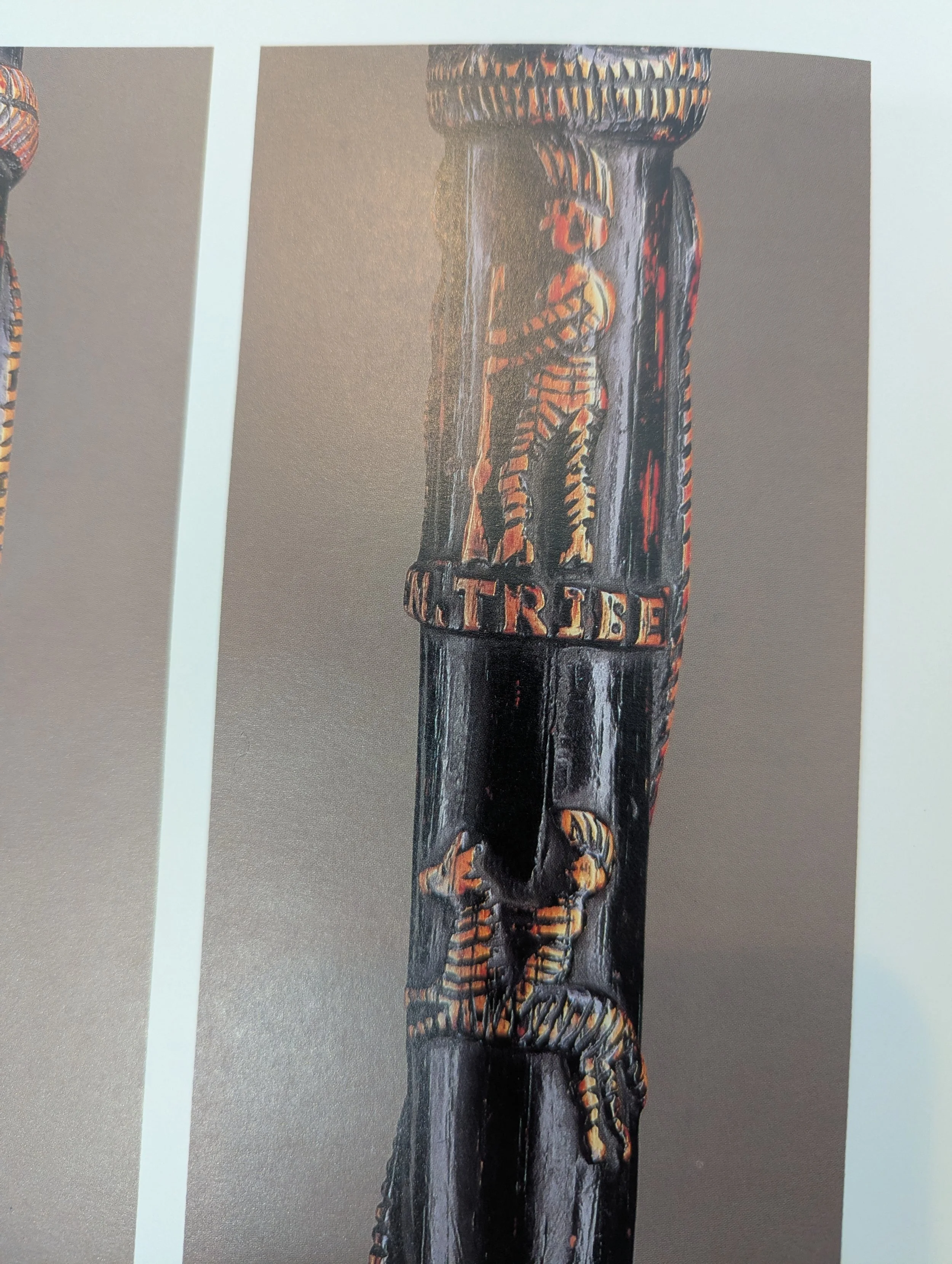
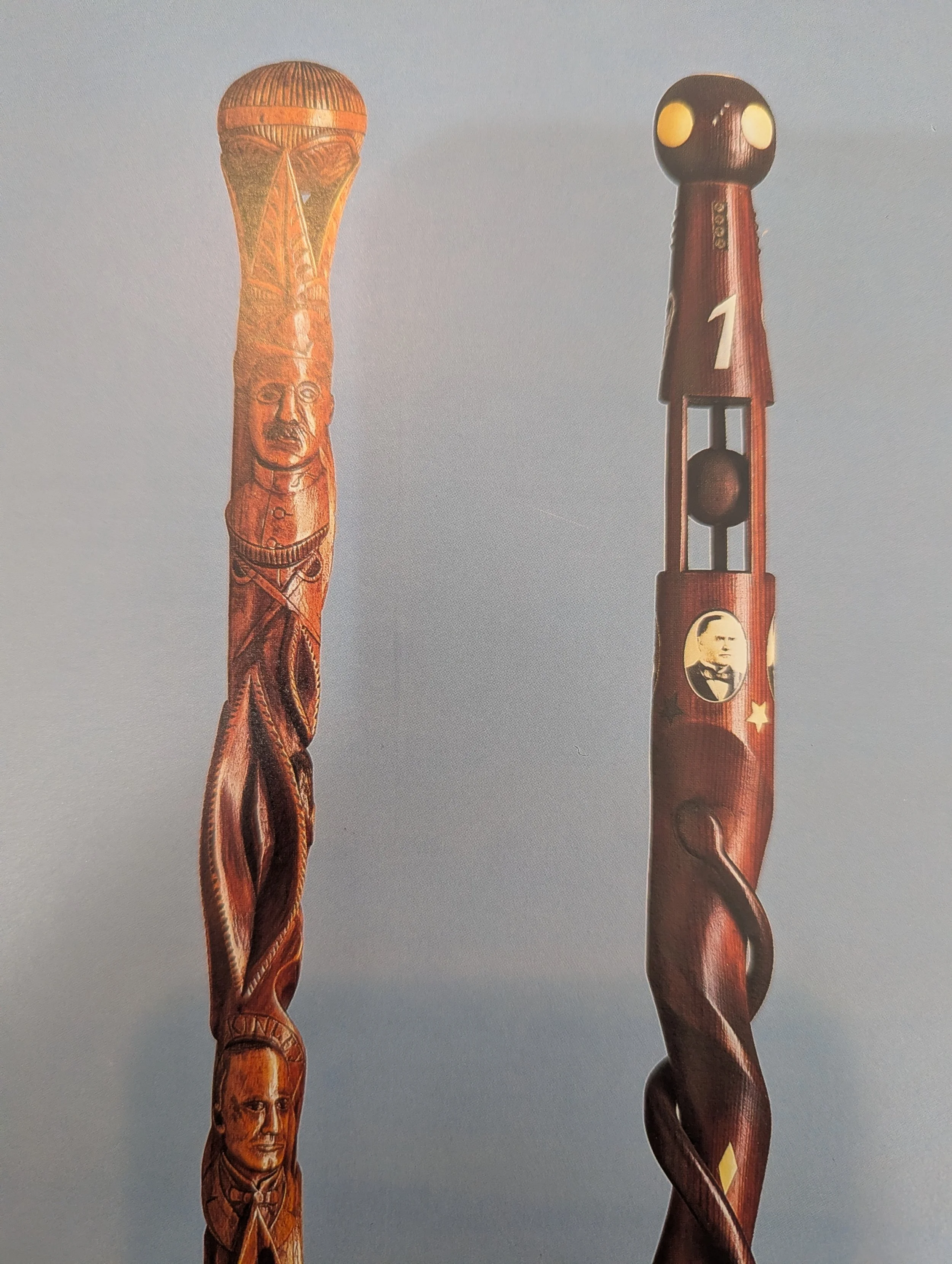
American Folk Art Canes, Personal Sculpture
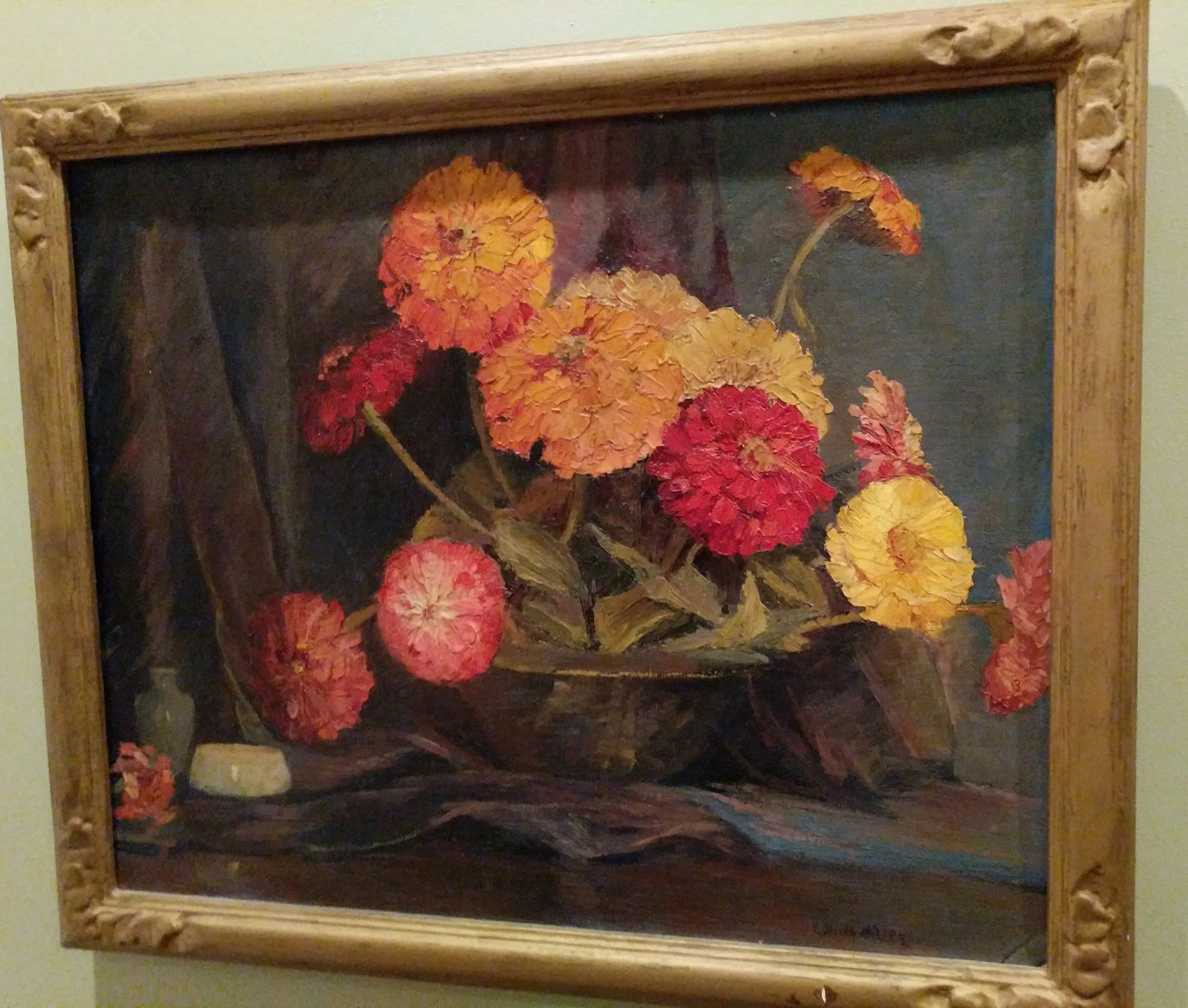
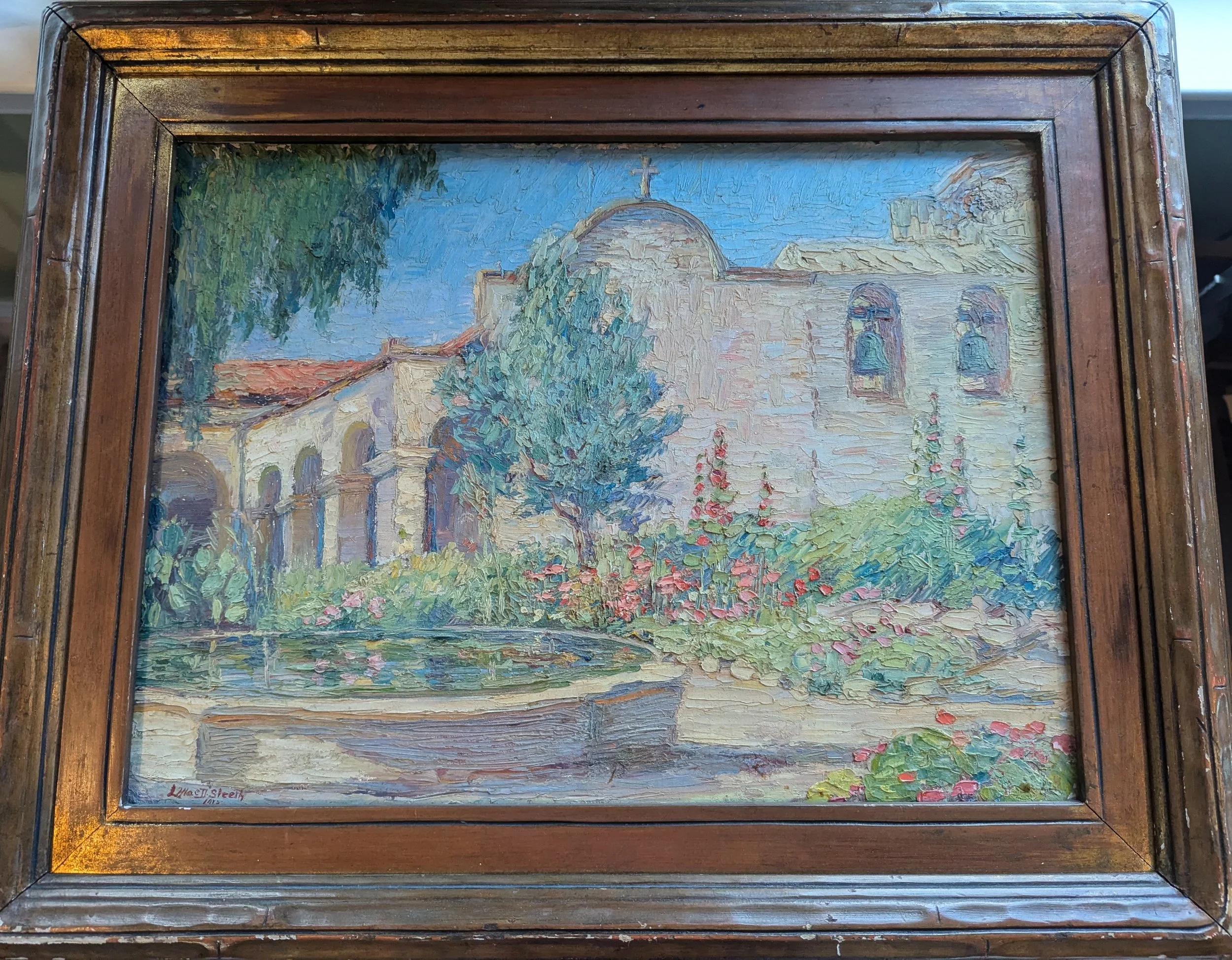
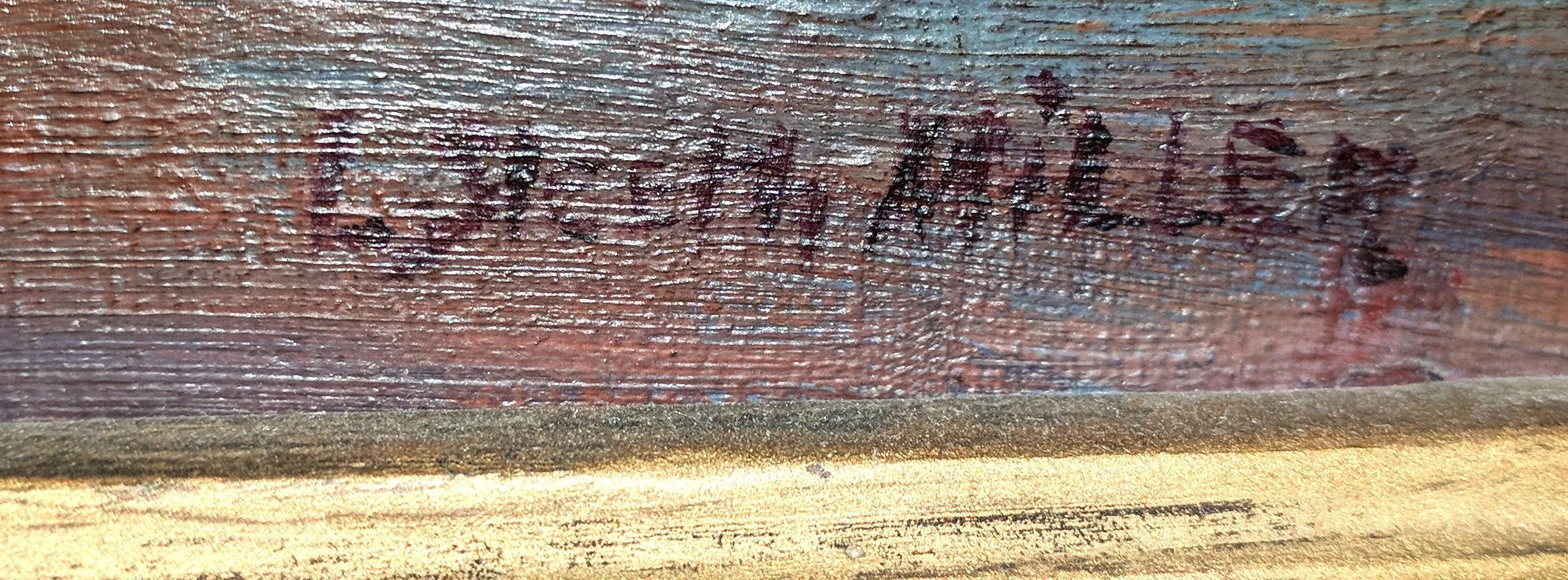
If you didn’t guess, we are actively looking for more works by Lola. Really any further information like articles, advertisements, photos and of course art work.
Lola MacDonald Sleeth Miller
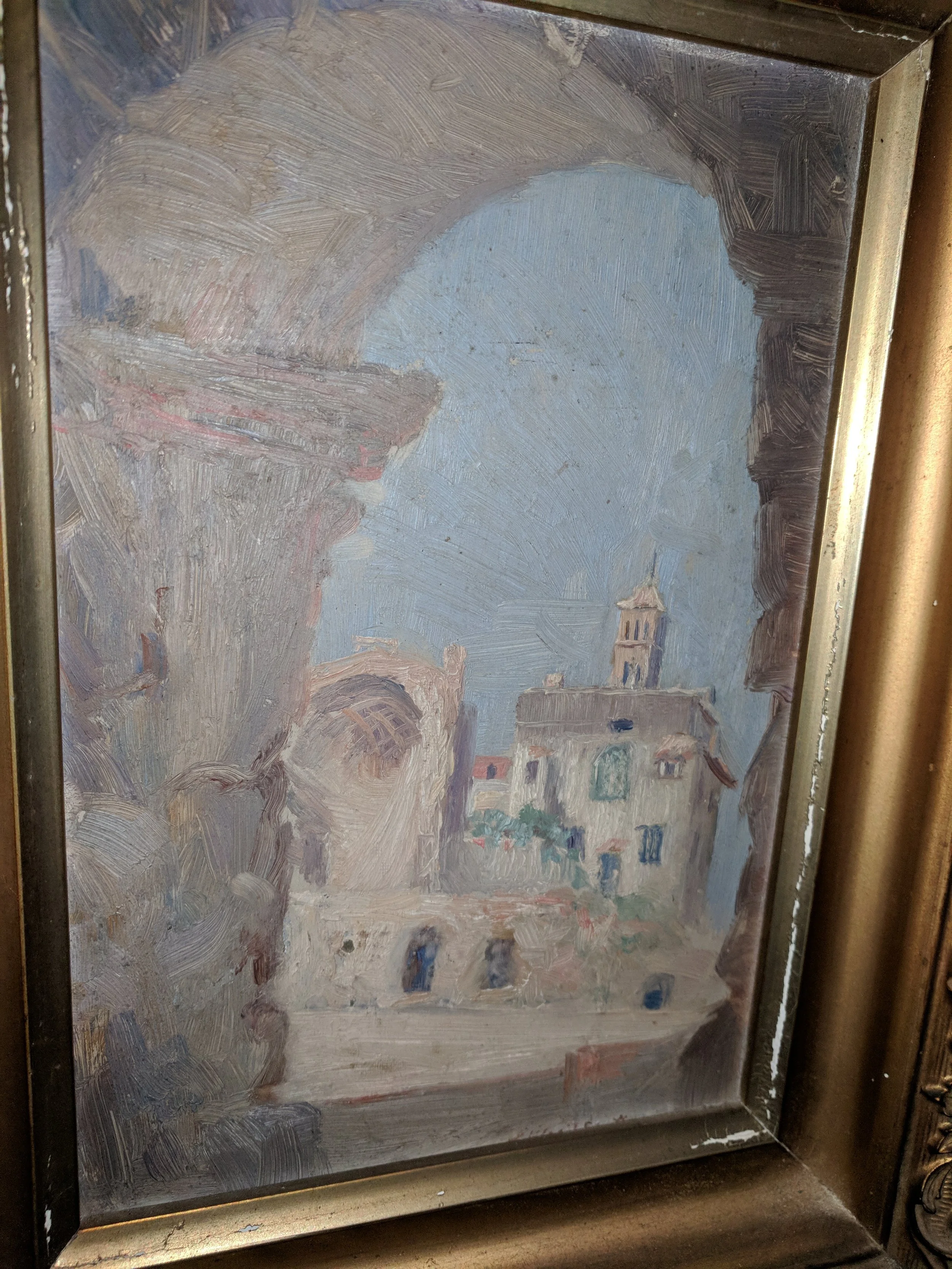
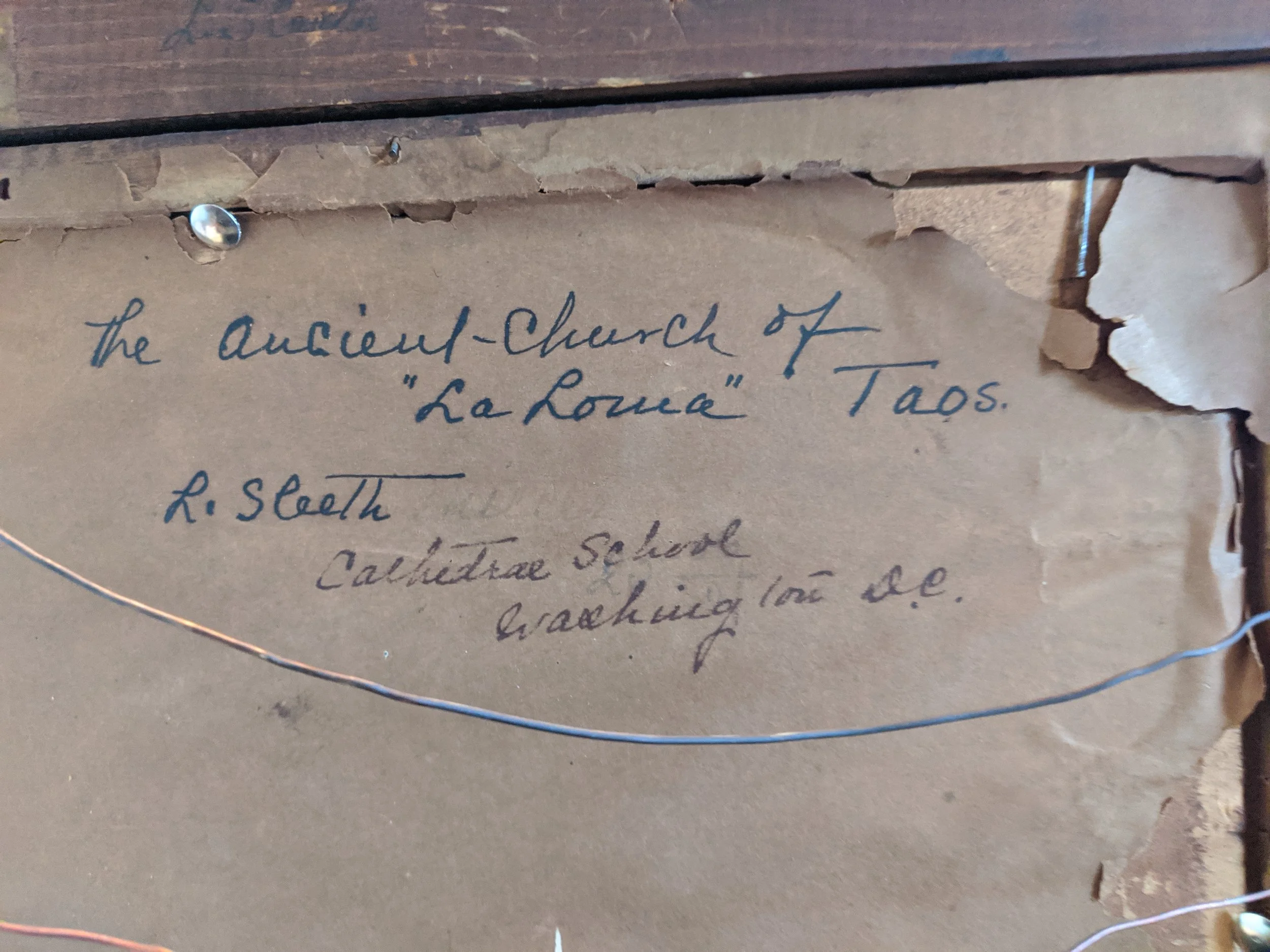
Lola, or Aunt Wodie, was a great aunt of Mrs. Wife’s.
Lola MacDonald Sleeth Miller (October 24, 1860 – April 24, 1951) was an American painter and sculptor.
She was born Lola MacDonald in Memphis, Missouri, to farmer Sterling Lynn MacDonald and his wife Electa Summerlin. She married Francis Sleeth (a noted artist), and from 1892 to 1899 was resident in San Francisco, where she studied with Douglas Tilden at the Mark Hopkins Art Institute. In Paris she studied with James Abbott McNeill Whistler and at the Académie Julian, and in New York City with Frederick MacMonnies and Emil Carlsen. She began working as an art teacher at the National Cathedral School in Washington, D.C. in 1901,remaining there for over thirty years. Sometime after 1920s she moved to Laguna Beach, California, and after marrying inventor T. Spencer Miller until her death.
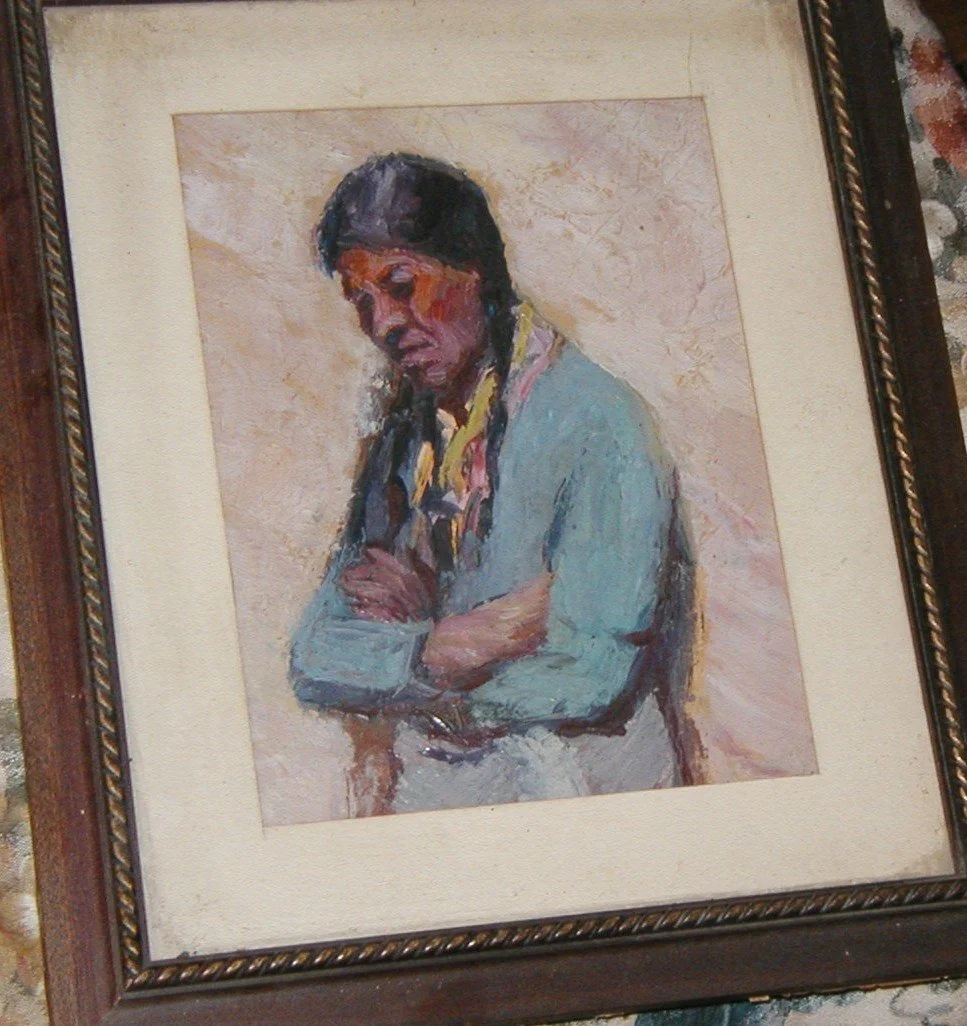
Lola was active in a variety of formats during her career, producing landscapes, portraits, and still life in oil and watercolor as well as carving portrait busts in marble.
She is an early female adherent of American Impressionist and little known today.
Thank you